How Many Teeth Do Dogs Have? Puppy and Adult Guide
If you are wondering how many teeth do dogs have? the short answer is 42 for an adult and 28 for a puppy. But the number is only part of the story. Puppies lose their baby teeth on a timeline, some keep teeth they should have lost, and adult tooth loss is never something to ignore. This guide covers counts, tooth types, the puppy timeline and when to call a vet.
By the Paws and Facts Editorial Team. Last checked November 2026. This is general information, not veterinary advice. Where we give our own opinion, we label it “Our advice”.
Key Takeaways
- Adult dogs have 42 permanent teeth. Puppies have 28 baby teeth (PetMD, VCA, AKC).
- Dogs have no wisdom teeth (PetMD).
- Puppies are born with no visible teeth. Baby teeth start to appear at about 2 to 4 weeks, and most adult teeth are in by about 6 to 8 months, depending on the source.
- Losing baby teeth is normal. Losing adult teeth is not and needs a vet (PetMD).
- Retained baby teeth can crowd adult teeth and usually need to be removed by a vet (VCA, PetMD).
- Daily brushing with dog toothpaste, never human toothpaste, is the care step all three sources point to.
Quick answer
Puppy: 28 teeth. Adult: 42 teeth (20 upper, 22 lower). If baby teeth are still there when the adult tooth comes in, or an adult tooth gets loose, book a vet visit.How Many Teeth Do Dogs Have? Puppy vs Adult Counts
| Life stage | Number of teeth | Notes |
|---|---|---|
| Puppy (baby or deciduous teeth) | 28 | Puppies are born without visible teeth (PetMD, VCA) |
| Adult (permanent teeth) | 42 | 20 upper and 22 lower (PetMD) |
| Wisdom teeth | None | Dogs do not have them (PetMD) |
That means an adult dog has 14 more teeth than a puppy. The extra teeth are molars and premolars that come in behind the baby teeth, so they never replace anything.
Adult Dog Teeth by Type
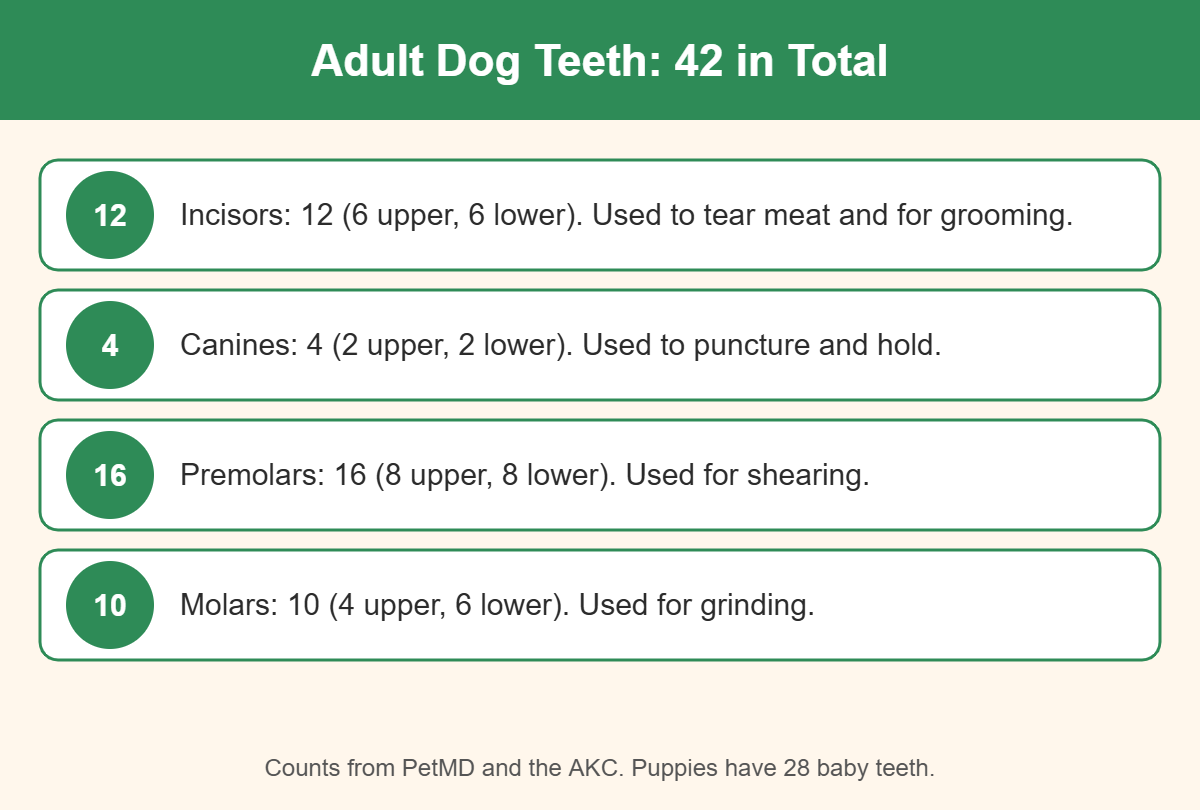
| Tooth type | Upper | Lower | Total | Main job |
|---|---|---|---|---|
| Incisors | 6 | 6 | 12 | Tear meat from bone and groom (AKC) |
| Canines | 2 | 2 | 4 | Puncture and hold, often called fangs (AKC) |
| Premolars | 8 | 8 | 16 | Shear food (AKC) |
| Molars | 4 | 6 | 10 | Grind and chew (AKC) |
PetMD and the AKC give the same totals: 12 incisors, 4 canines, 16 premolars and 10 molars. PetMD does not list the canine split by jaw, so the 2 and 2 figure comes from the AKC.
Puppy Teething Timeline
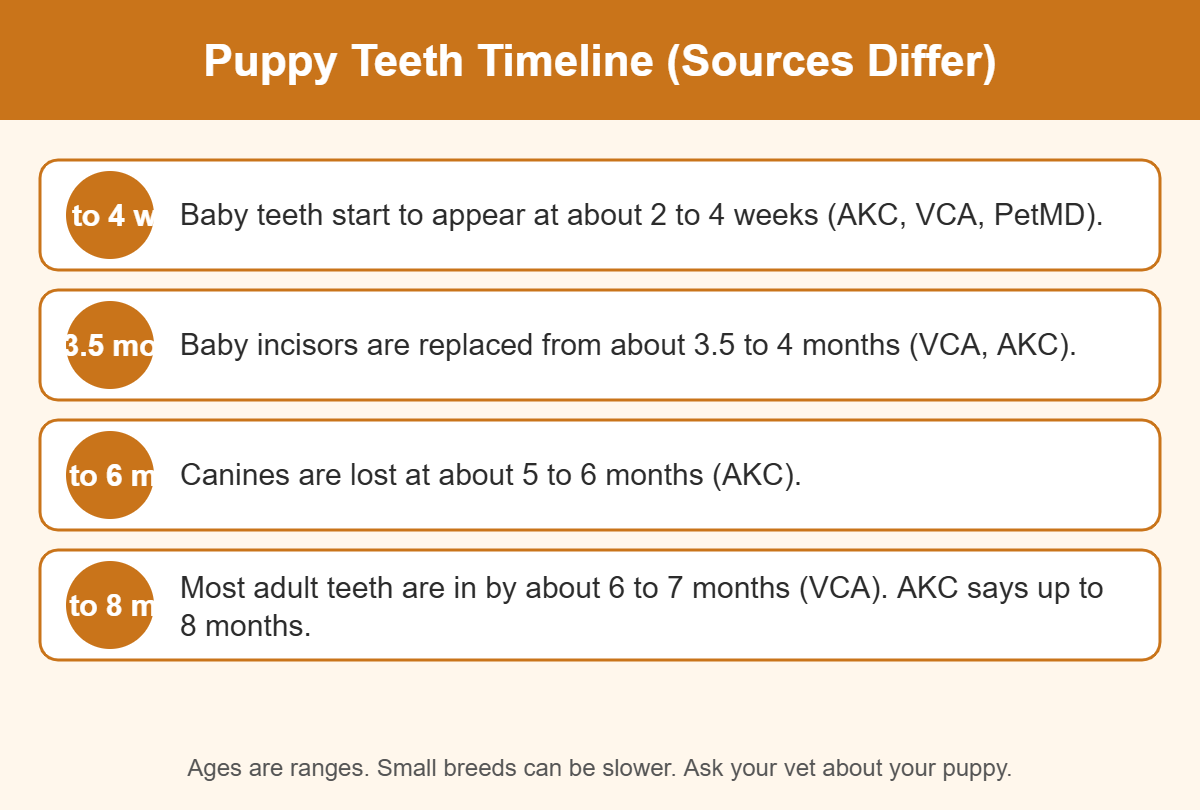
| Stage | What happens | Source |
|---|---|---|
| Birth | No visible teeth | PetMD, VCA |
| About 2 to 4 weeks | Baby teeth begin to appear | AKC says about 2 weeks, VCA about 3 weeks, PetMD 3 to 4 weeks |
| About 3.5 to 4 months | Adult teeth start to replace the baby incisors | VCA, AKC |
| About 5 to 6 months | Baby canines are lost | AKC |
| About 6 to 8 months | Most or all adult teeth are in | VCA says 6 to 7 months, AKC says premolars and molars at 5 to 8 months, PetMD says 3 to 7 months |
Baby teeth fall out when their roots are absorbed by the growing adult teeth underneath. VCA notes that puppies often swallow them, so you may never find one. PetMD says toy and small breeds may take longer to finish.

Our advice: expect a lot of chewing during teething and give your puppy safe chew toys instead of shoes and cables. The AKC suggests hard chew toys or dental chews as an alternative to hard bones. For bone risks, see our guides on whether dogs can eat bones and what to do if a dog ate chicken bones.
Retained Baby Teeth
A retained (or persistent) baby tooth is one that is still there when its adult tooth comes in. VCA says this forces the adult tooth into the wrong position, which can cause crowding and a bad bite.
- Most common: upper canines first, then lower canines, then incisors (VCA).
- Who is affected: small breeds and short nosed breeds more often, with bulldogs, pugs, Boston terriers and boxers named by VCA. PetMD says it is generally considered genetic.
- Problems: trapped food and plaque, tartar, gum disease, pain, abnormal wear and fractures (VCA).
- Treatment: VCA says retained teeth usually need prompt removal under general anesthesia, and advises against waiting until spay or neuter. PetMD says a vet will likely recommend surgical removal.
Our advice: check your puppy mouth once a week. If you can see two teeth in the same spot, take a photo and call your vet. VCA suggests weekly mouth checks until about 7 to 8 months of age.
Signs of Dental Problems

- Tooth loss in an adult dog. PetMD says this is not normal and means something is wrong.
- Loose or wiggly teeth. (PetMD)
- Bad breath that keeps getting worse. (PetMD)
PetMD says periodontal disease is the most common cause of adult tooth loss. Injury is another, including from chewing hard items such as beef or pork bones. Decay can progress quickly in small breeds and Greyhounds. PetMD also notes that dental disease has been linked to effects on the heart, liver and kidneys. It says dogs can eat normally without teeth, but that should not be an excuse to wait.
SAFE TO DO
- Brush daily with a vet recommended brush and dog toothpaste (PetMD)
- Do weekly mouth checks until about 7 to 8 months (VCA)
- Book vet dental cleanings when your vet advises them (PetMD, AKC)
- Talk about teeth at every yearly exam (PetMD)
AVOID
- Human toothpaste. The AKC says it can contain xylitol, which is toxic to dogs
- Hard bones, which PetMD links to broken teeth
- Waiting until spay or neuter to remove retained baby teeth (VCA)
- Ignoring a loose tooth or worsening bad breath
Home Care Routine by Age
| Age | What to do | Source |
|---|---|---|
| Young puppy | Let baby teeth fall out on their own. Watch for two teeth in one spot and give safe chew toys. | VCA, AKC (our advice on toys) |
| About 3 to 8 months | Do weekly mouth checks and start getting your puppy used to brushing. | VCA suggests checks to 7 to 8 months |
| Adult dog | Brush daily with dog toothpaste, keep up vet dental checks and avoid hard bones. | PetMD, AKC |
| Any age | Call your vet about a loose tooth, a broken tooth or breath that keeps getting worse. | PetMD |
Our advice: start handling your puppy mouth early, even before the adult teeth are in. Lift the lip for a few seconds, give a treat, and repeat. A puppy that is used to mouth handling is easier to brush later, and easier to check for problems.
Questions to Ask Your Vet About Teeth
- Are all of my puppy baby teeth gone, and are any adult teeth out of position?
- Does my breed have a higher chance of retained baby teeth?
- How often should my dog have a professional dental check?
- Which chew toys or dental chews do you think suit my dog size and chewing style?
- What brushing routine do you suggest, and how do I make it easy for my dog?
These questions are our own suggestions, not from the sources. The AKC and PetMD both advise discussing dental health at yearly exams, before problems start, which makes a regular visit the best time to ask.
Why Teeth Matter Beyond the Mouth
It is easy to think of teeth as a cosmetic issue, but PetMD notes that dental disease has been linked to effects on the heart, liver and kidneys. VCA also warns that retained baby teeth can trap food and plaque, which can lead to tartar, gum inflammation and early tooth loss. The practical message from all three sources is the same: small problems are easier to manage early, and a quick look inside the mouth every week costs nothing.
Where Our Sources Differ
| Topic | What we found |
|---|---|
| When baby teeth appear | AKC about 2 weeks, VCA about 3 weeks, PetMD 3 to 4 weeks |
| When all baby teeth are in | VCA says normally done by 6 weeks, AKC says 8 to 10 more weeks after they start, PetMD says by 3 to 5 months |
| When all adult teeth are in | VCA 6 to 7 months, PetMD 3 to 7 months, AKC up to 8 months for premolars and molars |
| Canine tooth split | Stated by AKC as 2 upper and 2 lower, inferred only from totals in PetMD |
Our advice: treat these ages as ranges. The PetMD figure for all baby teeth being in by 3 to 5 months looks like the outlier, since VCA and AKC both place it much earlier. Your vet can check your own puppy.
Frequently Asked Questions
What is the adult dog tooth count? Adult dogs have 42 permanent teeth, with 20 on the top jaw and 22 on the bottom jaw (PetMD).
How many baby teeth do puppies have? Puppies have 28 baby teeth. They are born with no visible teeth, and the baby teeth start to appear in the first few weeks.
Do dogs have wisdom teeth? No. PetMD says dogs do not have wisdom teeth.
When do puppies lose their baby teeth? Usually from about 3.5 to 4 months, as adult teeth push through. Most adult teeth are in by about 6 to 8 months, depending on the source.
Is it normal for an adult dog to lose a tooth? No. PetMD says adult tooth loss is not normal and signals a problem, most often gum disease or injury. Call your vet.
What are retained baby teeth? Baby teeth that stay in place when the adult tooth erupts. VCA says they can crowd adult teeth and usually need prompt removal by a vet.
Can a dog eat without teeth? PetMD says dogs can eat normally without teeth, but dental disease can affect the rest of the body, so do not ignore it.
Should I brush my dog teeth? PetMD advises daily brushing with a vet recommended toothbrush and dog toothpaste. Never use human toothpaste.
Final Thoughts
Now you know how many teeth do dogs have: 42 as an adult and 28 as a puppy. Watch for retained baby teeth, brush with dog toothpaste, and treat any adult tooth loss as a reason to see your vet.
Photo note
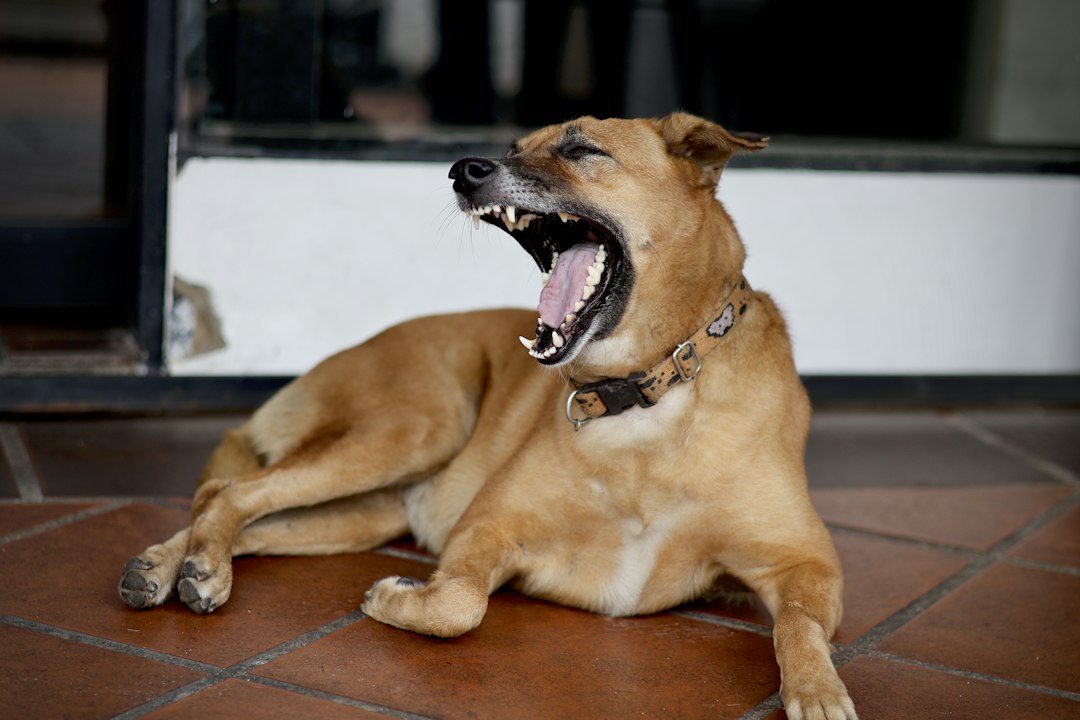
The photos are stock images from Unsplash. The dogs shown are used only as illustrations and may not match the age or breed in the text next to them.Sources
Flags: where a page has a commercial publisher or no separate reviewer, we say so. Where we give opinion, it is labeled Our advice.
- PetMD: how many teeth dogs have (commercial publisher, written by Monica Tarantino DVM, reviewed by Veronica Higgs DVM, updated April 2024)
- VCA: persistent baby teeth in dogs (commercial hospital chain, three named vet authors including two dental specialists, no separate reviewer, updated April 2024)
- AKC: how many teeth dogs have (breed club publisher, written by Alexandra Anastasio, no named reviewer, quotes two vets, updated April 2024)