Dog Chews on Everything: Why and How to Stop It
You come home to a chewed shoe, a gnawed table leg or a shredded cushion, and it is the third time this week. If your dog chews on everything, you are far from alone. Chewing is one of the most common reasons owners lose patience with a dog, yet it is also one of the most fixable.
This guide explains why dogs chew, how puppy chewing differs from adult chewing, and what actually helps. It is based on advice from the ASPCA and the American Kennel Club.
By the Paws and Facts Editorial Team. Last checked November 2026. This is general information, not veterinary advice. Where we give our own opinion, we label it “Our advice”. We do not give medicine names or doses.
Key Takeaways
- Puppies chew to ease teething pain and explore. The heavy phase usually ends around six months.
- Adult dogs chew for jaw exercise, fun and stimulation, or to cope with boredom, anxiety or frustration.
- Chewing mostly when alone can point to separation anxiety.
- Excessive chewing can also signal mouth pain, so ask a vet if it is new.
- Do not punish after the fact. Dogs cannot link the scolding to earlier chewing.
- Keep tempting items away, supervise, swap in approved chews, and give plenty of exercise.
Quick answer: Dogs chew because of teething, boredom, stress or simple enjoyment. The fix is management plus better outlets: put items away, supervise, swap and praise, rotate good chews, and exercise your dog before you leave.
Photo note: the photos on this page are stock images for illustration. The dogs shown are not our own pets.
When a Dog Chews on Everything: Common Reasons
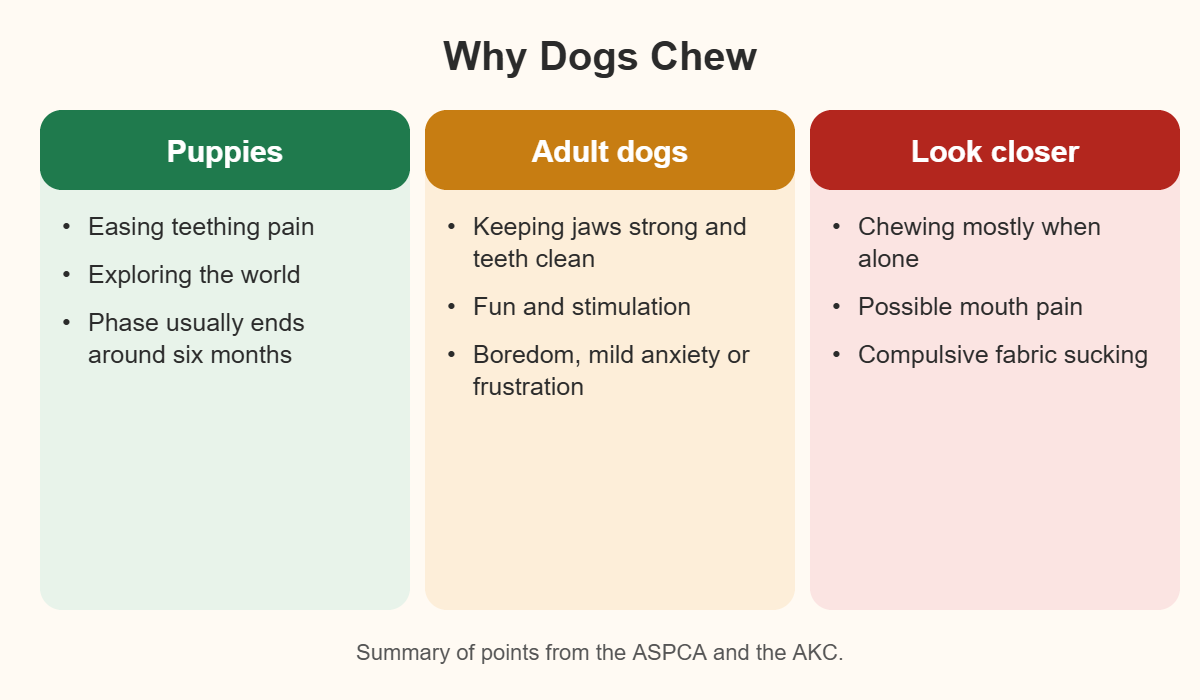
The ASPCA explains that chewing is normal dog behavior. The trouble starts when the dog picks the wrong targets. The reasons depend partly on age.
| Reason | What the sources say |
|---|---|
| Teething | Puppies chew to ease pain from teething. The phase usually ends around six months. |
| Exploring | Puppies use their mouths to learn about the world. |
| Jaw exercise and clean teeth | Adult dogs chew to keep their jaws strong and teeth clean. |
| Boredom | The AKC says too little exercise or mental work can push a dog toward destructive chewing. |
| Anxiety or frustration | Chewing can relieve boredom, mild anxiety or frustration. |
| Dull toys | The AKC says household items may win over toys the dog finds uninteresting. |
| Mouth pain | The AKC says excessive chewing can signal discomfort in the mouth, teeth or gums. |
| Separation anxiety | Chewing mainly when alone, often with whining, pacing or accidents. |
| Hunger or fabric sucking | The ASPCA lists hunger on a calorie restricted diet and compulsive fabric sucking. |
Looking at when and what your dog chews is the fastest way to find the cause. A dog that chews only when you leave is a different case from a teething puppy.
Puppy Chewing
Puppies chew to ease pain and to explore, so this is a stage to manage, not a flaw to punish. The ASPCA says the intense phase usually ends around six months of age. It suggests cold items such as ice cubes, freezable toys or a frozen wet washcloth may numb teething pain, and that gentle guidance helps a puppy learn to chew only its own toys.
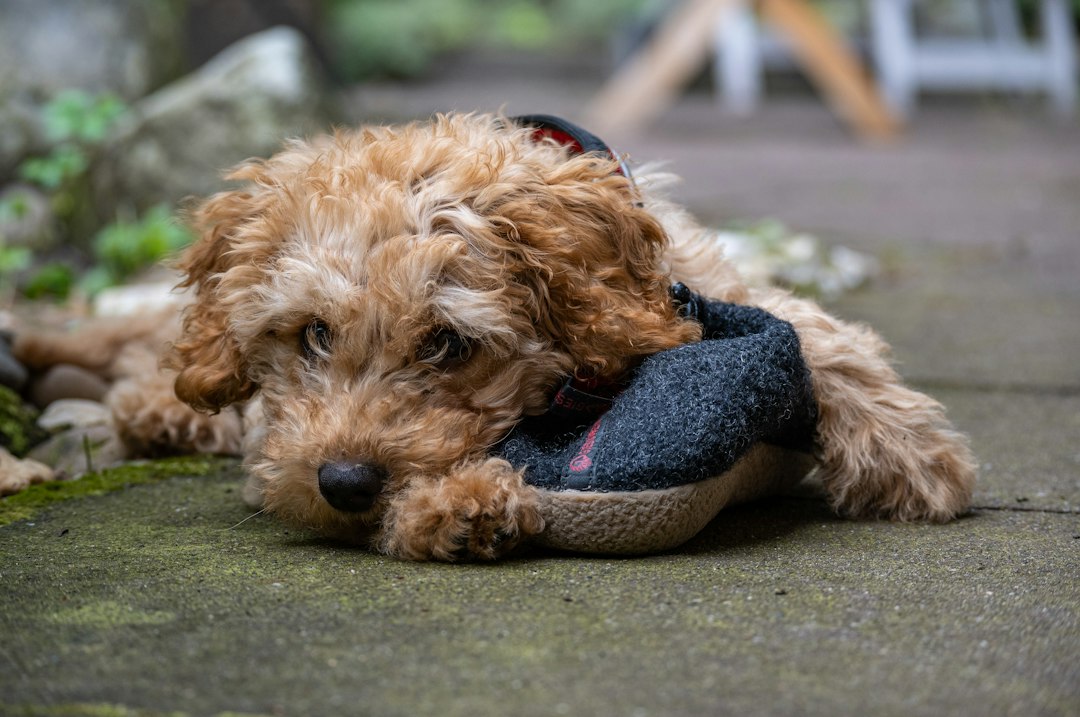
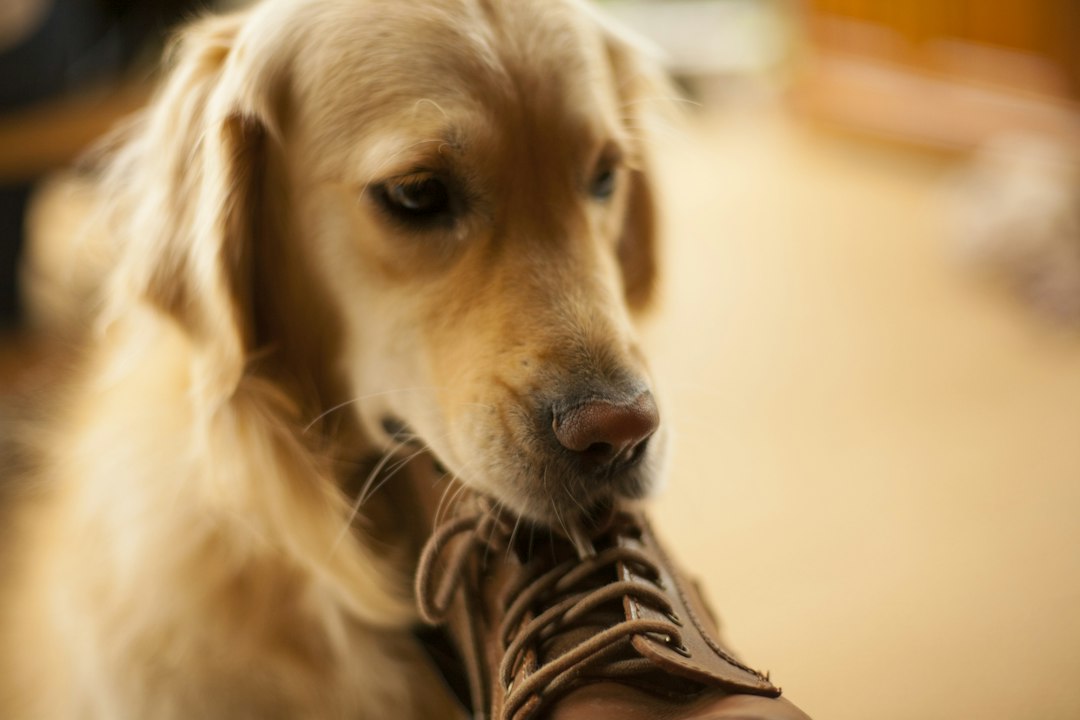
The photo above is an illustration of a puppy with a slipper.
Adult Dog Chewing
Adult chewing is more often about habit, boredom or stress. The AKC says insufficient exercise or mental engagement can push a dog toward destructive chewing, and that unappealing toys may lose out to household items. It also says excessive chewing may point to mouth pain, so a vet check is worth it if the habit is new.
Our advice: ask yourself what changed. A new schedule, a recent move, less exercise or a new pet can all trigger chewing in a dog that was calm before. If anxiety looks like the cause, our anxiety dog training guide explains calm, step by step help.
How to Stop Destructive Chewing
Both sources agree on the basic plan: manage the environment, supervise and redirect, and meet your dog’s needs.
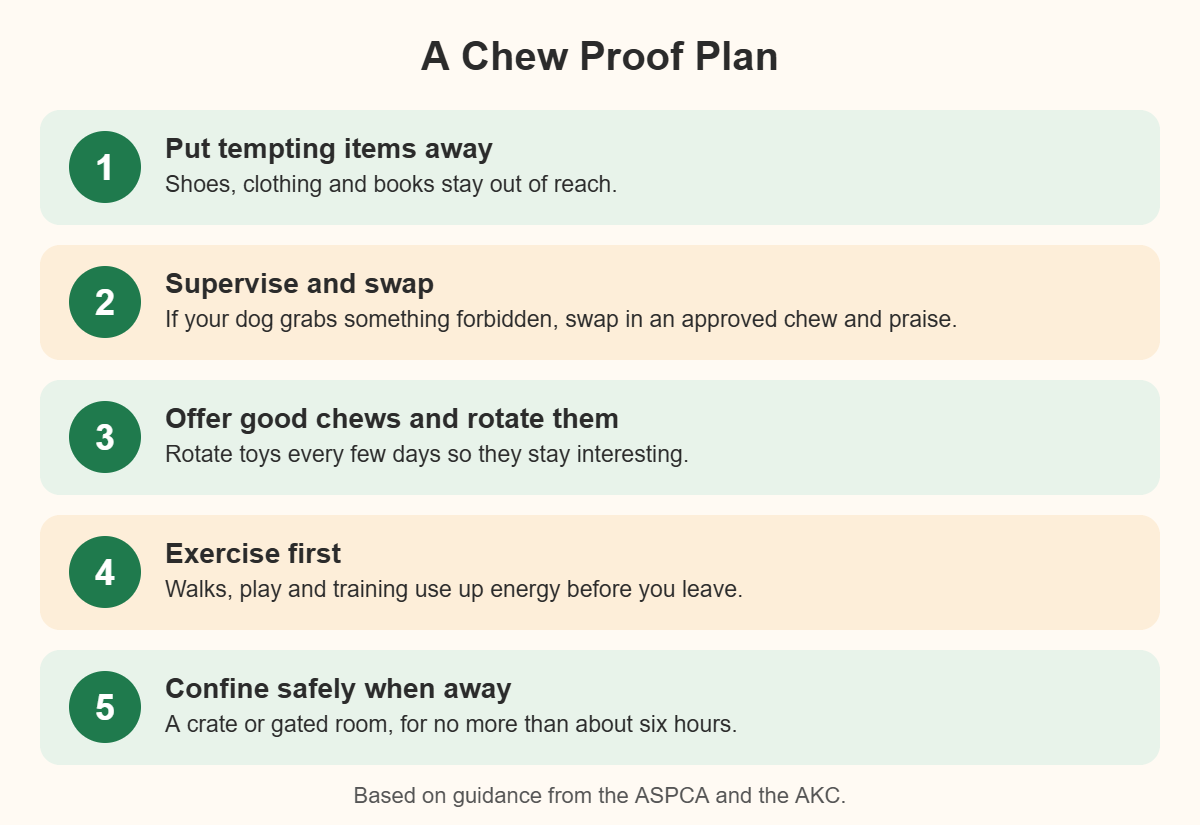
- Limit access. The AKC calls keeping items out of reach the only fully effective way to protect belongings. The ASPCA suggests putting away shoes, clothing and books.
- Supervise and redirect. If your dog grabs something forbidden, calmly interrupt and swap in an approved chew, then praise.
- Exercise first. Daily walks, play, tug and fetch, training and food puzzles all help. Exercise your dog before leaving it alone for a long time.
- Confine safely when you cannot watch. Use a crate or small gated room for no more than about six hours, with suitable toys.
- Teach “leave it”. The AKC suggests teaching simple cues. Our dog training guide covers the basics.
SAFE TO DO
- Put shoes, clothes and books away
- Rotate a few good toys every few days
- Swap and praise instead of scolding
- Exercise before you leave
- Ask a vet about any chew you are unsure of
AVOID
- Punishing after the damage is done
- Taping or muzzling the mouth
- Giving cooked bones
- Crating for more than about six hours
- Leaving tempting items within reach
Good Chews and Toys
The ASPCA suggests plenty of suitable chew toys, rotated every few days so they stay interesting, and food filled puzzle toys, including part of the dog’s regular meals. The AKC suggests stuffing hollow rubber toys with treats or moistened kibble, and keeping only two or three toys out at once. It adds that puzzle toys often work best when you are present.
Safety matters too. The ASPCA says never to give cooked bones, which can splinter, and to watch for choking with edible chews. Our articles on dog antler chews and whether dogs can eat bones explain the risks of very hard or splintering chews.
Chewing When You Are Away
Many owners notice the damage only after they come home, which makes it hard to know what triggered it. The AKC suggests stuffing hollow rubber toys with treats or moistened kibble for times you are out, and keeping puzzle toys for when you are home, since they often work best with you present. It also suggests saving a dog’s favorite toys for play sessions with you, which keeps them special.
The ASPCA adds a few more points for the household.
- Avoid situations that make your dog nervous, such as crating it near an animal it dislikes.
- Plan for frustrating moments, such as watching squirrels or other dogs, by giving an appropriate toy to shake and tear.
- Throw away sanitary products in a container your dog cannot reach, since they can cause dangerous blockages.
- Use indoor games such as fetch, hide and seek, and properly played tug when the weather keeps you inside, as the AKC suggests.
Our advice: make a short checklist before you leave the house. Shoes put away, toys out, exercise done, and a safe space ready. A steady routine does more than any single product.
Where Our Sources Differ
| Topic | ASPCA | AKC |
|---|---|---|
| Main focus | Puppy teething, management and what not to do | Adult dogs, redirecting and toy choice |
| Mouth pain | Not a main point on the page we read | Says excessive chewing can signal mouth pain |
| Separation anxiety | Describes it in detail | Mentions it only in tags on the page we read |
| Crate time | No more than about six hours | Not given on the page we read |
| Date and author | No author or date on the page | Hilarie Erb, no reviewer named |
The two pages agree on the main message: manage the home, redirect calmly and meet your dog’s needs.
When to Get Help
The ASPCA suggests asking a veterinarian if you are unsure whether a chew or bone is safe. It recommends a certified behavior professional for compulsive chewing such as fabric sucking, or if the dog may act aggressively when you take something from its mouth.
Our advice: see your vet if chewing is sudden, if your dog drops food or seems to be in pain, or if you think your dog swallowed something it should not have. We do not give medicine names or doses.
Final Thoughts
When a dog chews on everything, the answer is rarely a stricter scolding. It is a calmer routine: remove temptations, supervise, swap and praise, and give your dog enough exercise and good things to chew. If the habit is new or comes with signs of stress or pain, bring in your vet.
Frequently Asked Questions
Why do puppies chew so much?
The ASPCA says puppies chew to ease teething pain and to explore. The intense chewing phase usually ends around six months of age.
Why does my adult dog still chew?
The ASPCA says adult dogs chew to keep their jaws strong and teeth clean, and for fun or stimulation. The AKC adds that boredom, toys the dog finds dull, and possible mouth pain can also play a part.
Should I punish my dog after finding a chewed item?
No. The ASPCA says dogs cannot link a scolding to chewing that happened earlier. The AKC also says redirecting to suitable chew toys works better than relying on punishment.
What should I do when I catch my dog chewing something forbidden?
The ASPCA suggests saying “Uh oh”, swapping in an approved chew and praising your dog. The AKC says to calmly interrupt, then offer an allowed toy once the dog drops the item.
Can anxiety cause destructive chewing?
Yes. The ASPCA says destructive chewing can signal separation anxiety, especially when the dog chews mainly when alone, often with whining, pacing or accidents. A qualified professional can help.
How long can I crate my dog to stop chewing?
The ASPCA says to confine a dog safely, in a crate or a small gated room, for no more than about six hours, with forbidden items removed and suitable toys provided.
Could chewing mean my dog has mouth pain?
It can. The AKC says excessive chewing can signal discomfort in the mouth, teeth or gums, such as gum disease, and advises asking a vet.
Do taste deterrent sprays work?
The ASPCA says they can discourage chewing on forbidden items but work only alongside teaching what is allowed, and need to be reapplied daily for two to four weeks.
Sources
Sources are listed with notes.
- ASPCA: Destructive chewing (nonprofit, no author, reviewer or date shown on the page).
- American Kennel Club: How to stop adult dogs from excessive chewing (written by Hilarie Erb, no separate reviewer listed).