Dog Training Problems: Common Mistakes and Fixes
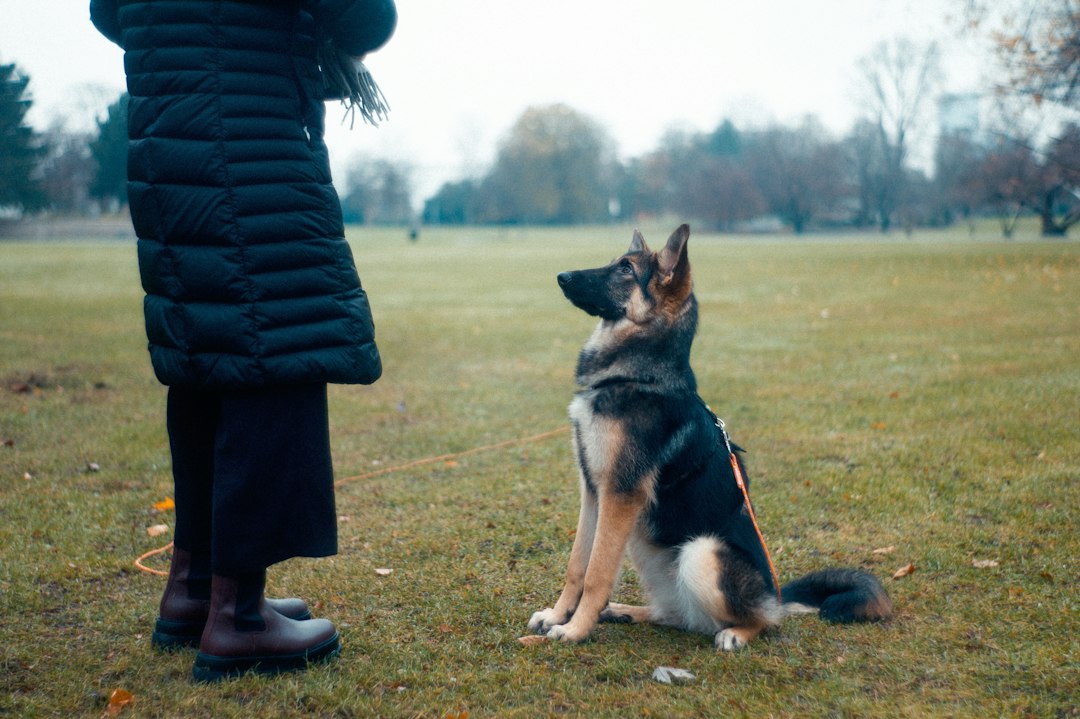
You say “sit” at the park and your dog stares at a squirrel. You practiced all week at home, yet it feels like nothing sticks. Dog training problems like this are frustrating, but they are rarely a sign of a stubborn or unteachable dog.
This guide explains the most common mistakes behind training trouble and how to fix each one. It is based on two articles from the American Kennel Club written by a certified professional dog trainer.
By the Paws and Facts Editorial Team. Last checked November 2026. This is general information, not veterinary advice. Where we give our own opinion, we label it “Our advice”. We do not give medicine names or doses.
Key Takeaways
- Most training trouble comes from owner habits such as mixed signals, weak rewards and poor timing.
- Keep your tone upbeat and take a break if you feel frustrated.
- Reward quickly and often, and reward the right behavior.
- Say each cue once, and give each word one meaning.
- Practice in many places, not only in the kitchen.
- Everyone in the home should use the same cues and rules.
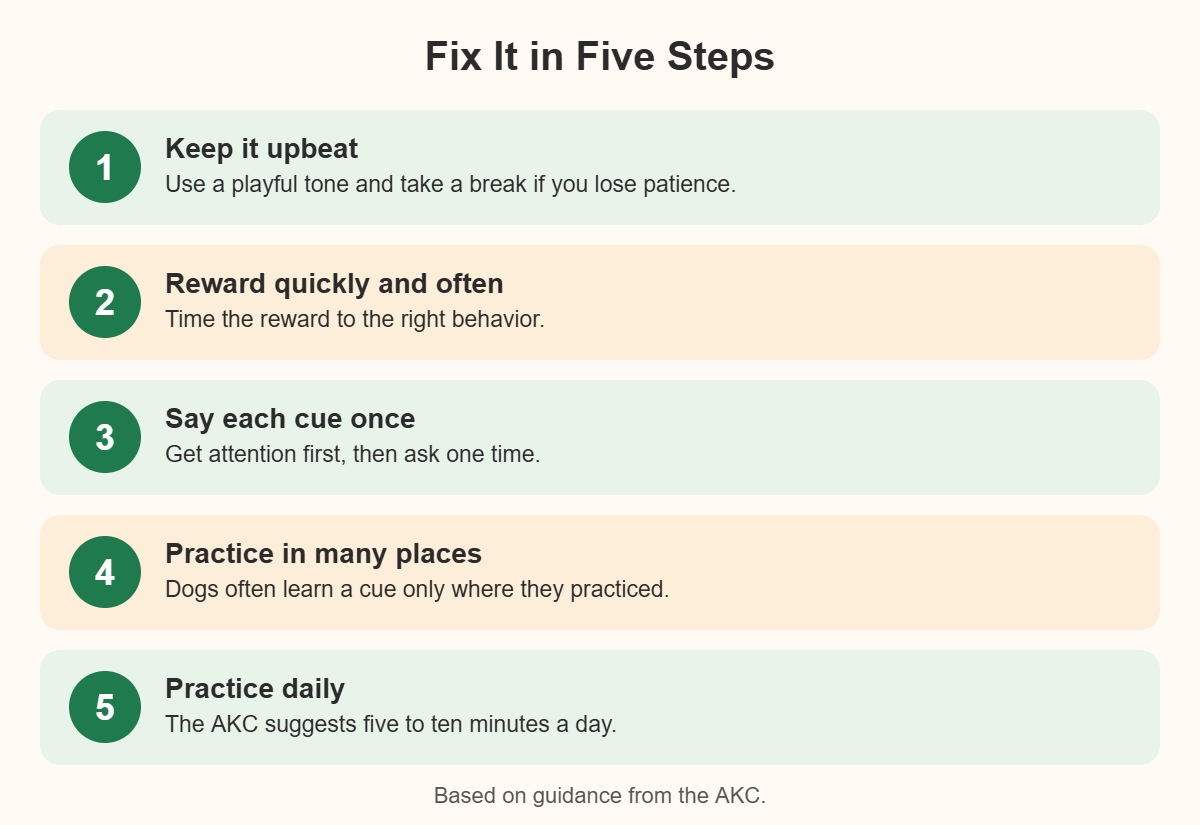
Quick answer: Training usually stalls because of inconsistency, unclear cues, weak or badly timed rewards, and practicing in one place. Fix them with an upbeat tone, quick rewards, one cue said once, varied locations and five to ten minutes of practice a day.
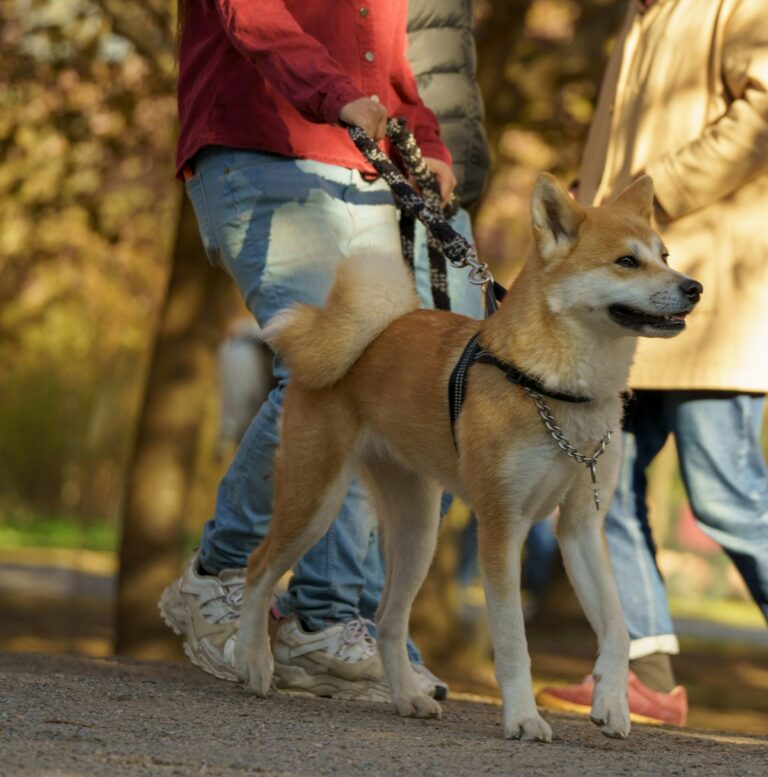
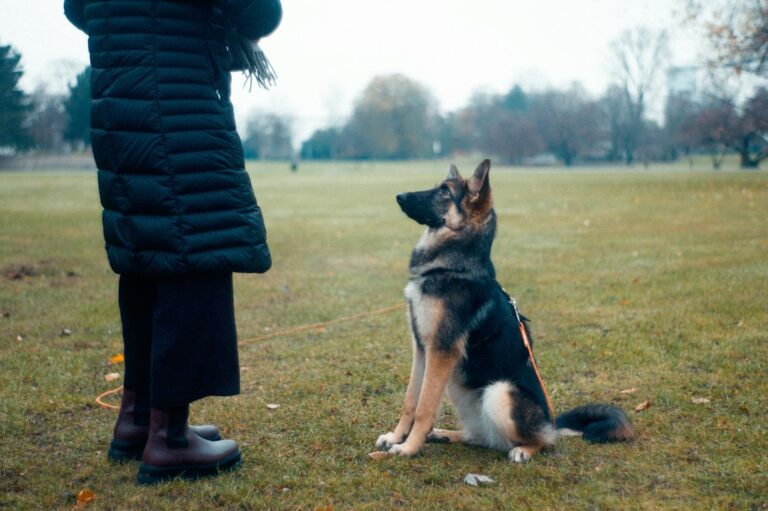
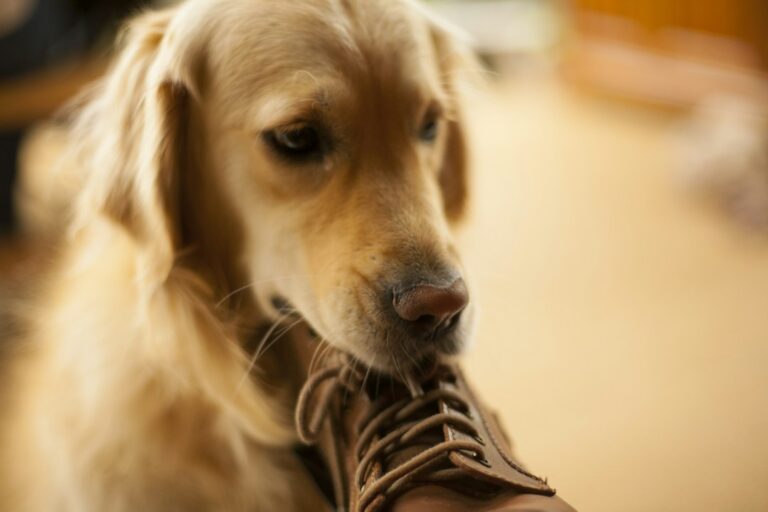
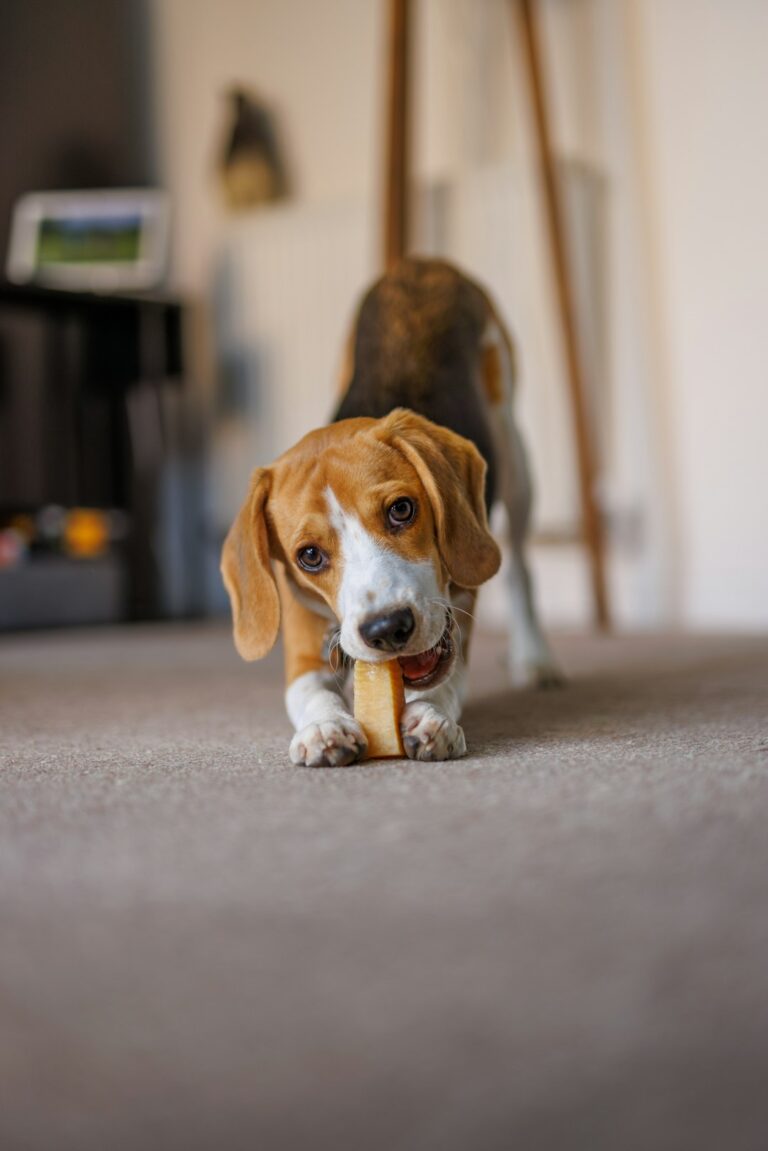
Photo note: the photos on this page are stock images for illustration. The dogs and people shown are not our own.
Why Dog Training Problems Happen
Dogs read tone, body language and timing at least as much as words. When what we say, what we do and what we reward do not match, the dog does its best to guess. The AKC lists eleven common mistakes, and they fall into three groups.
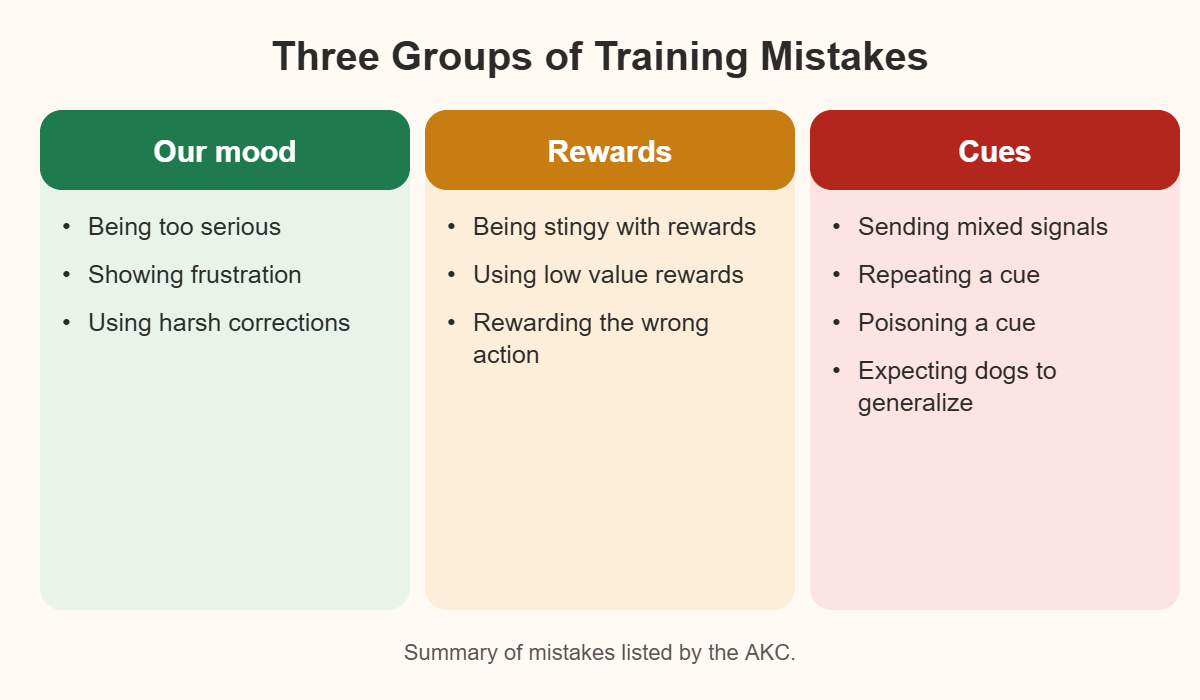
| Mistake | What goes wrong | The fix |
|---|---|---|
| Being too serious | Dogs respond to tone and body language, and flat praise falls flat | Use a playful, upbeat tone |
| Showing frustration | The dog may shut down | Stay positive or take a break |
| Harsh corrections | Dogs become afraid to try | Use positive reinforcement |
| Stingy rewards | Skimping weakens behavior | Reward generously and quickly |
| Low value rewards | The dog does not care enough | Use better rewards for harder tasks |
| Rewarding the wrong action | The dog is reinforced for whatever it is doing at reward time | Time the reward to the right behavior |
| Mixed signals | Body language that contradicts the cue, or similar sounding cues | Keep cues and body language consistent and distinct |
| Expecting dogs to generalize | Cue works only where it was practiced | Train in many places |
| Repeating cues | The dog learns to ignore the first request | Say it once after getting attention |
| Poisoning cues | Cue linked to something unpleasant | Keep recall tied to good things |
| Skipping daily practice | Classes alone slow progress | Practice five to ten minutes a day |
Notice that almost every fix is about the person, not the dog. That is good news, because it means you can change the outcome.
Problem 1: Mood and Tone
The AKC says owners often hold back silly voices and praise, and that dogs respond to tone and body language as much as words. It also says that showing frustration when a dog makes a mistake can make the dog shut down, and that scolding words can make dogs afraid to try.
Our advice: if you notice your patience running out, end the session on an easy win and try again later. A short, happy session teaches more than a long tense one. Our dog training guide covers the basics of positive methods.
Problem 2: Weak or Badly Timed Rewards
Rewards are how a dog learns what you want. The AKC says to reward generously and often, and to deliver rewards quickly, using a marker such as a clicker or the word “yes” to bridge the gap. It also says a reward the dog does not care about will not motivate it.
- Build a reward ranking, with the best rewards for hard tasks.
- Include life rewards such as walks or attention.
- Time the reward to the correct behavior, because the dog is reinforced for whatever it is doing at that moment.
- Once a behavior is solid, gradually fade rewards to a random schedule.
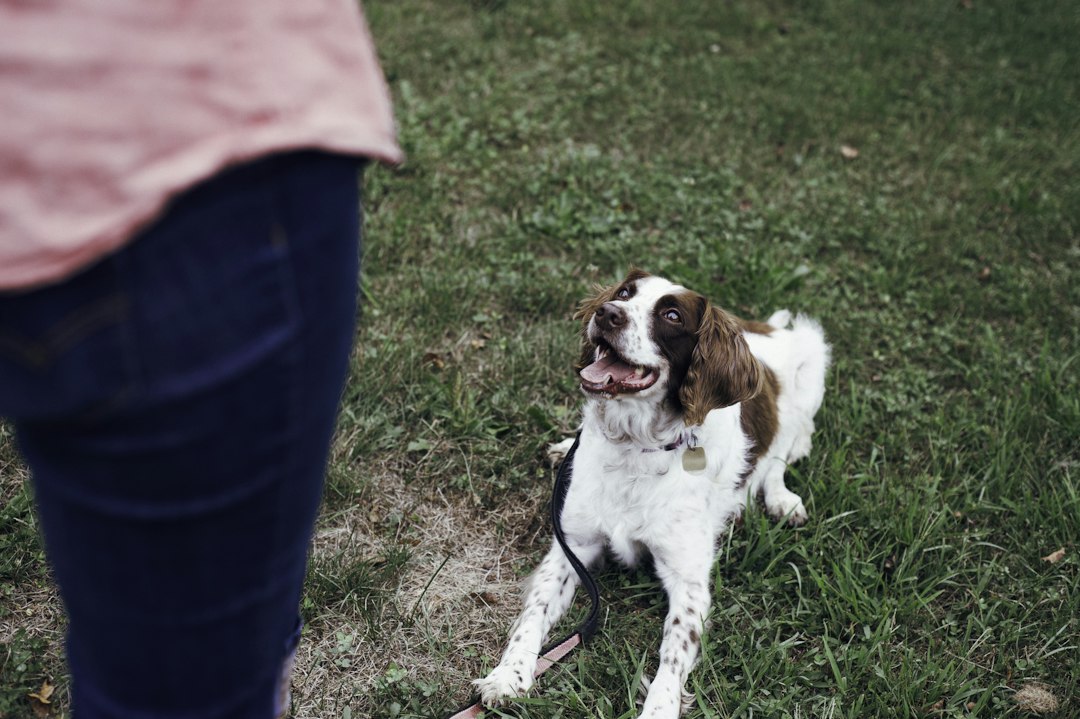
The photo above shows a dog watching its owner, an illustration of attention.
Problem 3: Unclear Cues
Cues cause more trouble than most owners expect. The AKC says that body language that contradicts the verbal cue, hovering, or similar sounding cues can confuse a dog. It also says that saying a cue again and again teaches the dog to ignore the first request.
Its fix is to get your dog’s attention first with its name or “watch me”, say the cue once, and if the dog is too distracted, find another way to get the behavior. The second AKC article adds that each word should have one meaning. A cue like “down” should only mean lie down, so it should not also mean get off the sofa.
Problem 4: Training in Only One Place
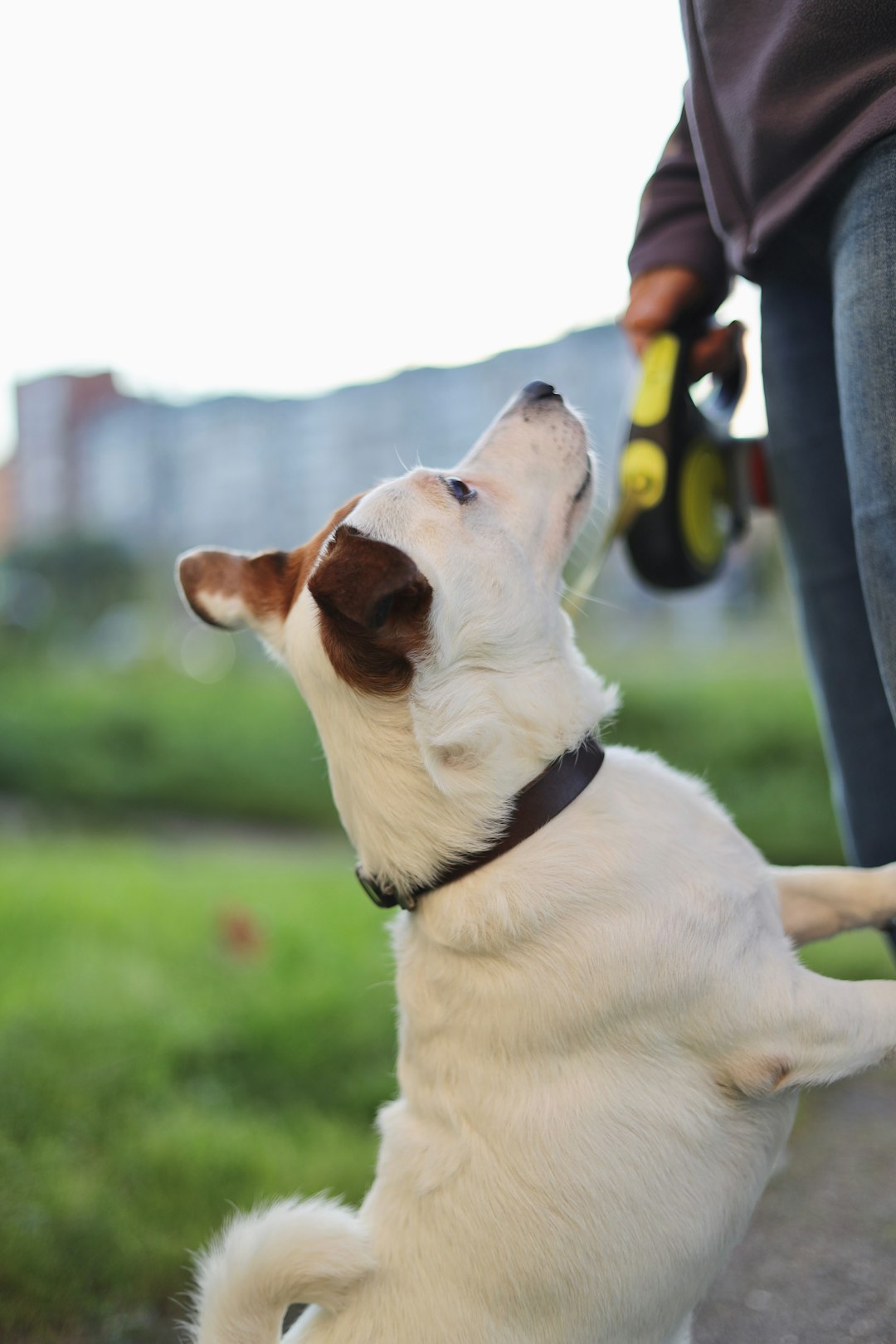
Many owners are surprised when a dog that sits perfectly in the kitchen ignores them outside. The AKC says dogs often learn a cue only in the place they practiced. Its advice is to train in many environments, and to train distance, duration and distraction separately before combining them.
Problem 5: Inconsistency at Home
The second AKC article, on consistency, makes a simple point: dogs need to know what is expected. It says changing rules, cues or methods mostly creates confusion, and that predictable responses build a dog’s confidence and trust. Inconsistency can also keep unwanted behavior alive, since a behavior that occasionally still works keeps being tried.
- Use the same words, hand signals and tone for each cue.
- Make household rules, such as furniture access or greeting behavior, apply to everyone.
- Do not change rules based on your mood. Allowing begging sometimes makes it hard to learn it is not allowed.
- Hold a short family meeting, agree on a plan and follow it.
Perfection is not required. The article says occasional mistakes are fine, but frequent changes in rules or rewards undermine training.
SAFE TO DO
- Use an upbeat tone
- Reward quickly and generously
- Say each cue once
- Practice in different places
- Agree on rules as a family
AVOID
- Repeating the same cue over and over
- Scolding after the fact
- Calling your dog for unpleasant things
- Changing rules based on mood
- Skipping practice between classes
Where Our Sources Differ
| Topic | AKC: common mistakes (2024) | AKC: consistency (2025) |
|---|---|---|
| Main focus | Eleven mistakes with fixes | Why and how to be consistent |
| Timing of rewards | Gives specific advice, including a marker | Mentions timing only briefly |
| Session length | Five to ten minutes daily | Not discussed on the page we read |
| Household rules | Not covered in detail | Covers shared rules and family meetings |
| Author and review | Stephanie Gibeault, no reviewer listed | Stephanie Gibeault, no reviewer listed |
The pages are by the same author and agree with each other. Both are one source family, so treat their advice as one expert view, and check with a local trainer for your own dog.
When to Get Professional Help
Our advice: if your dog seems fearful, anxious or aggressive, or if you have followed these steps for several weeks without progress, ask a qualified trainer or your vet. Pain and stress can look like disobedience. Our guides on anxiety dog training and dog behavior modification explain what to look for.
Final Thoughts
Most dog training problems come down to clear cues, good timing and steady habits, not a stubborn dog. Stay upbeat, reward the right thing quickly, say each cue once, practice in different places and keep the whole household on the same page. A few minutes a day adds up faster than you would expect.
Frequently Asked Questions
Why is my dog not listening to me?
Often the cause is confusion, not defiance. The AKC says mixed signals, repeated cues, weak rewards and training in only one place can all make a dog seem to ignore you.
Why does my dog only listen at home?
The AKC says dogs often learn a cue only in the place where they practiced. Train in many environments and build up distance, duration and distraction separately before combining them.
Should I repeat a cue if my dog does not respond?
No. The AKC says repeating a cue teaches the dog to ignore the first request. Get attention first with the dog’s name or “watch me”, say the cue once, and find another way if the dog is too distracted.
Are harsh corrections ever the answer?
The AKC says scolding can make dogs afraid to try, and recommends positive reinforcement so the dog stays willing to learn.
How long should I practice each day?
The AKC suggests five to ten minutes daily, and building cues into routines, such as asking for a sit before a walk.
Why does consistency matter so much?
The AKC says dogs need to know what is expected, and changing rules, cues or methods mostly creates confusion. If a behavior sometimes still gets the dog what it wants, the dog keeps doing it.
What is a poisoned cue?
The AKC describes it as linking a cue to something unpleasant, such as calling a dog to a nail trim, so the dog stops responding. Keep recall tied to good things.
When should I get professional help?
Our advice: ask a qualified trainer or your vet if problems are getting worse, if your dog seems fearful or in pain, or if you see aggression. We do not give medicine names or doses.
Sources
Sources are listed with notes.
- American Kennel Club: Make dog training more effective with these basics (written by Stephanie Gibeault, MSc, CPDT, April 2024, no reviewer listed).
- American Kennel Club: What your dog trainer wishes you knew about consistency (written by Stephanie Gibeault, August 2025, no reviewer listed, same publisher as the first source).