Dog Scratch Carpet: Why It Happens and How to Stop

It is late in the evening and you hear a steady scratching from the living room. You look over and find your dog scratch carpet in the same corner again, turning in circles and pawing at the fibers. Most owners find this puzzling and a little worrying, especially when the carpet starts to look worn.
The good news is that carpet scratching usually has a clear reason, and most reasons have a simple fix. This guide explains why dogs do it, how to tell normal habits from a problem, and what to do. It is based on advice from Dogs Trust and Vetstreet.
By the Paws and Facts Editorial Team. Last checked November 2026. This is general information, not veterinary advice. Where we give our own opinion, we label it “Our advice”. We do not give medicine names or doses.
Key Takeaways
- Scratching the carpet is often a natural habit linked to nesting, scent or hiding food.
- Boredom, stress, anxiety, pain or illness can also drive it.
- Scolding can reinforce the behavior, so interrupt calmly instead.
- Meet exercise, mental and rest needs, and offer better outlets such as dig boxes and snuffle mats.
- See a vet if the behavior is new, sudden or comes with other changes.
Quick answer: Dogs scratch carpet to make a bed, leave scent, reach a smell, hide food or release stress. Meet your dog’s needs, limit access, redirect calmly, and check with a vet if the habit is sudden or comes with other changes.
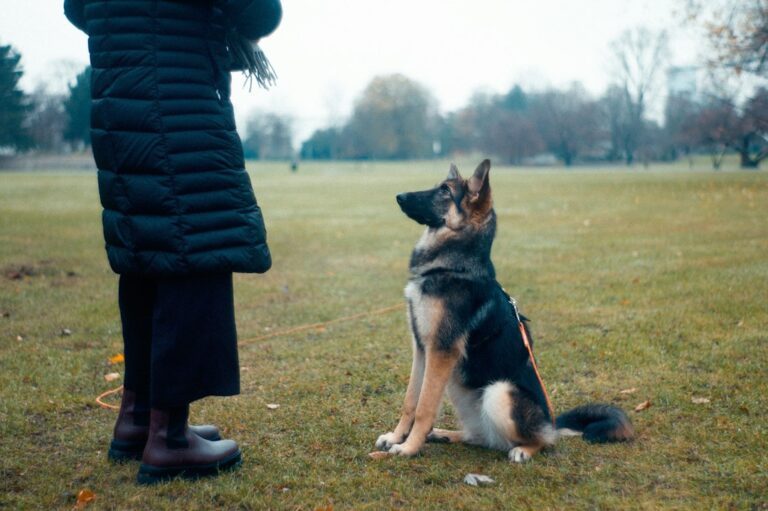
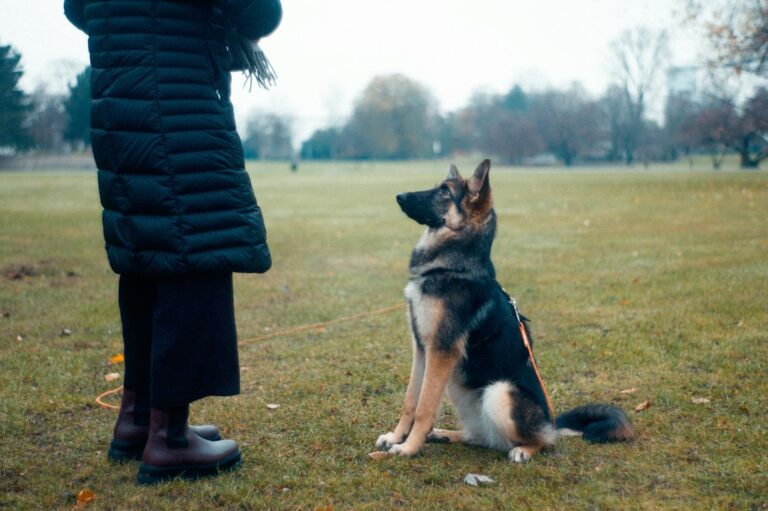
Photo note: the photos on this page are stock images for illustration. The dogs shown are not our own pets.
Why Does My Dog Scratch Carpet?
Dogs Trust and Vetstreet list several overlapping reasons. Most dogs have more than one, which is why the habit can be hard to read at first.
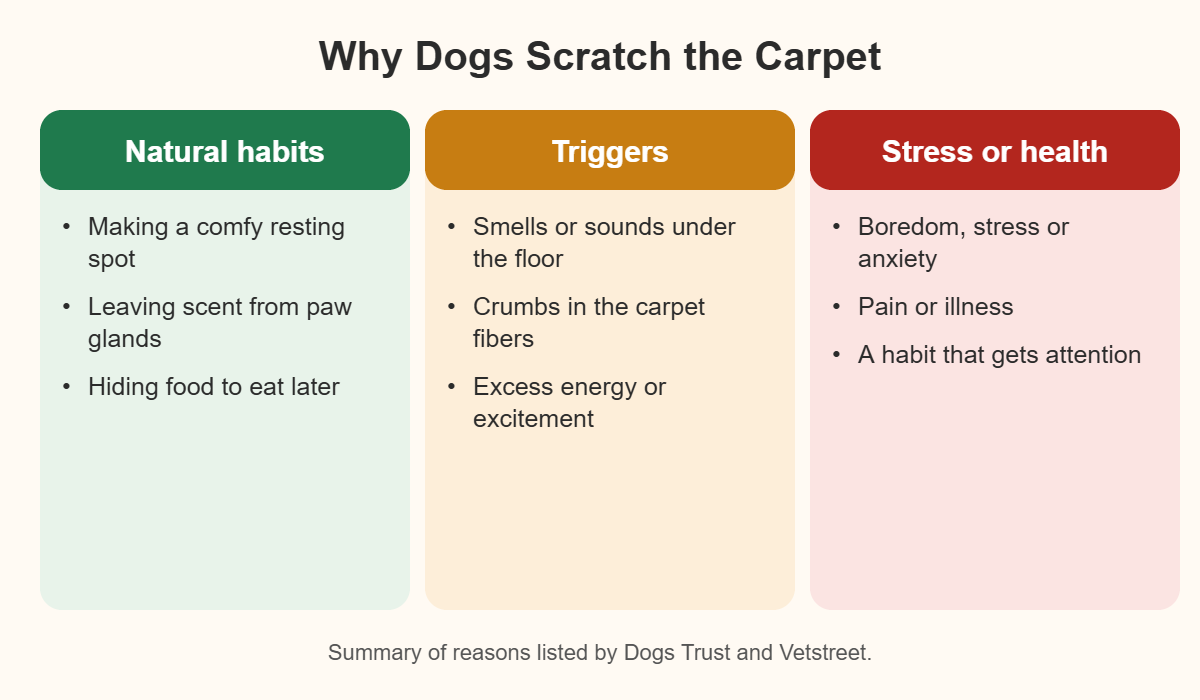
| Reason | What it looks like |
|---|---|
| Nesting and comfort | Scratching and turning before lying down. Dogs Trust links this to ancestors that dug before napping. |
| Scent and communication | Scratching leaves scent from paw glands, or responds to another dog’s scent. |
| Hunting smells or sounds | Pawing at one spot because of something heard or smelled under the floor. |
| Hiding food | Burying a treat to eat later. Dogs Trust says this can sometimes relate to resource guarding or compulsive behavior. |
| Crumbs or smells | Vetstreet says a crumb trapped in the fibers or an interesting smell can start the digging. |
| Boredom, stress or anxiety | A self soothing outlet, especially when left alone. |
| Excess energy | Vetstreet says digging can burn off excitement after play. |
| Pain or illness | Discomfort can drive stress relieving behaviors. |
| Learned attention | If scratching gets a reaction or reward, it can become a routine. |
The first three are natural habits. The rest depend on what is happening around your dog. That is why watching when and where the scratching happens helps more than guessing.
Natural Habits, Not Bad Behavior
Many dogs scratch before lying down. Both sources describe this as a bedding instinct. Dogs Trust says dogs may do it to make a cozy spot or adjust the temperature of their bedding, a habit inherited from ancestors who dug before napping. Vetstreet makes the same point and says some dogs dig and turn as an innate way of fluffing a bed.
If your dog scratches briefly, settles and sleeps, that is usually just a bedtime routine. A soft bed in a quiet spot may be all you need to offer.
When It Points to Boredom or Stress
Dogs Trust lists boredom, stress and anxiety as common drivers. It says scratching can be a self soothing outlet, especially when a dog is left alone. Vetstreet adds that excited or anxious dogs may dig when they cannot do what they want, such as chasing a squirrel that is out of reach.
Signs that stress may be involved include scratching mostly when you leave, scratching at doors or one corner repeatedly, or scratching alongside other changes in behavior. Our anxiety dog training guide explains calm, step by step ways to help an anxious dog, and our guide to dog behavior modification covers the basic methods.

The photo above is an illustration of a resting dog and is not a sign of any condition.
Could It Be Pain or Illness?
Sometimes. Dogs Trust says discomfort can drive stress relieving behaviors and that behavior changes can come from undetected medical issues such as pain, allergies or stomach problems. It recommends seeing a vet if the dog shows separation related signs, has a recent change in behavior, becomes generally more fearful, or seeks comfort more often.
Our advice: if the scratching is new, sudden or intense, treat it as a health question first and a training question second. Take notes or short videos to the appointment, as Dogs Trust suggests. We do not give medicine names or doses.
How to Stop Your Dog Scratching the Carpet
The sources agree on a practical order of steps.
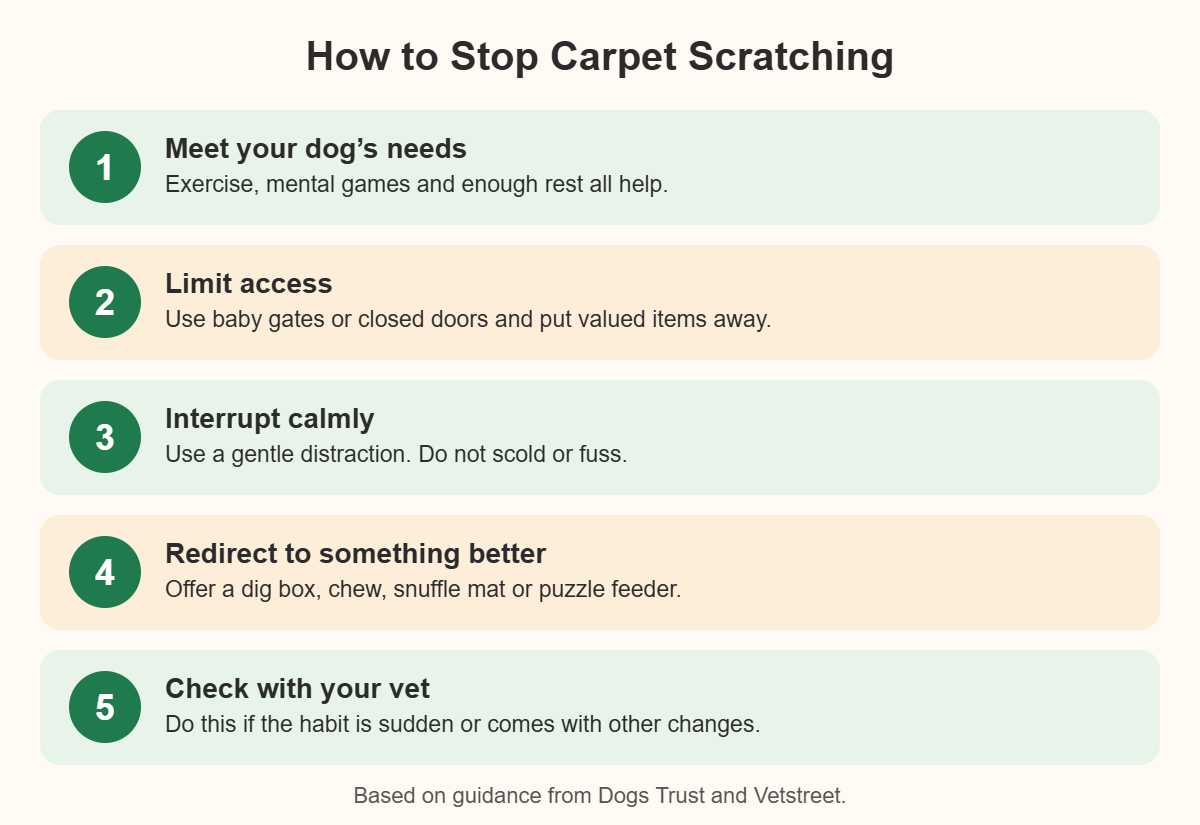
- Meet needs. Dogs Trust says to meet physical, mental and rest needs, because tiredness can increase destructive behavior.
- Limit access. Use baby gates or closed doors and put valued items away.
- Interrupt calmly. Dogs Trust suggests a distraction such as a sound in another room, then offering a suitable activity. Vetstreet suggests a mildly startling sound that gets attention without frightening the dog.
- Redirect. Once the cycle is broken, Vetstreet says to call the dog over and ask for a cued behavior such as sit, look or touch, then reward with treats and praise.
- Protect the spot. Vetstreet suggests heavy mats or indoor and outdoor throw rugs over worn areas, and cleaning more often if crumbs or smells are the trigger.
SAFE TO DO
- Offer a dig box, chews or a snuffle mat
- Rotate toys every few days
- Praise your dog for using the right items
- Calmly interrupt and redirect
- Keep a note of when scratching happens
AVOID
- Scolding or making a fuss
- Ignoring a sudden change in behavior
- Leaving a bored dog alone for long stretches without an outlet
- Leaving valued items within reach
- Using frightening sounds
Better Outlets for Scratching and Digging
Dogs Trust suggests giving a range of enrichment instead of only removing the problem. Dig boxes, chews and a mix of toys help, and rotating them every few days keeps them interesting. Snuffle mats, treats scattered in the grass and puzzle feeders at mealtimes also work. Introduce new items at your dog’s pace and praise your dog for using them.

Dogs Trust also recommends reward based training, including “leave” and “swap”, to teach a dog to give up items. Our dog training guide covers the basics of reward based training.
Where Our Sources Differ
| Topic | Dogs Trust | Vetstreet |
|---|---|---|
| Main focus | Destructive behavior, enrichment and health checks | Why dogs dig in carpet and quick fixes |
| Interrupting | A distraction such as a sound in another room | A mildly startling sound that does not frighten the dog |
| Vet advice | Gives clear signs for a vet visit | Does not address when to see a vet on the page we read |
| Protecting floors | Gates and closed doors | Heavy mats or throw rugs |
| Author | Behaviour team, no named author | Dr. Wailani Sung, no reviewer named |
The two pages agree on the main message: understand the reason, stay calm and give a better outlet.
When to Get Professional Help
Dogs Trust says that for separation related destruction, owners should look to an accredited clinical animal behaviourist. It also suggests arranging company for the dog, such as friends, family, dog walkers or day care, while the problem is being worked on. Our advice: if scratching is intense, comes with panic when you leave, or does not improve after a few weeks of steady effort, ask your vet for a referral.
Final Thoughts
Seeing your dog scratch carpet is usually normal, and it often comes down to nesting, scent or a need for something to do. Stay calm, meet exercise and mental needs, and offer better outlets. If the habit is sudden or comes with other changes, talk to your vet before assuming it is only bad behavior.
Frequently Asked Questions
Is it normal for a dog to scratch the carpet?
Often yes. Dogs Trust says dogs may scratch to make a cozy resting spot, leave scent from paw glands, reach a smell or sound, or hide food. It becomes a concern when it is constant, destructive or new.
Why does my dog scratch the carpet before lying down?
Both sources describe a bedding instinct. Dogs Trust says some dogs scratch to make a comfortable spot or adjust the temperature of their bed. Vetstreet says some dig and turn before lying down, which may be an innate way of fluffing a bed.
Can boredom or anxiety cause carpet scratching?
Yes. Dogs Trust lists boredom, stress and anxiety as reasons, noting that scratching can be a self soothing outlet, especially when a dog is left alone. Vetstreet says excited or anxious dogs may dig when they cannot do what they want.
Should I scold my dog for scratching the carpet?
No. Dogs Trust says scolding or fussing can reinforce the behavior. Vetstreet says dogs may repeat it if it gets a reaction, even a scolding. Interrupt calmly and offer something else to do.
What can I give my dog to scratch or dig instead?
Dogs Trust suggests dig boxes, chews, a range of toys rotated every few days, snuffle mats and puzzle feeders, with praise for using them.
Could scratching be a sign of pain or illness?
It can be. Dogs Trust says discomfort can drive stress relieving behaviors and that behavior changes can come from undetected medical issues such as pain, allergies or stomach problems.
When should I see a vet?
Dogs Trust says to see a vet if the dog shows separation related signs, has a recent behavior change, becomes more fearful or seeks comfort more often. Our advice: also call your vet if the scratching is sudden, intense or comes with signs of distress.
How do I protect the carpet while I train?
Vetstreet suggests heavy mats or indoor and outdoor throw rugs over worn areas. Dogs Trust suggests baby gates or closed doors and putting valued items away.
Sources
Sources are listed with notes.
- Dogs Trust: Destructive behaviour in dogs, how to stop it (charity, reviewed by the Dogs Trust Behaviour team, no individual author listed).
- Vetstreet: Why does my dog dig in the carpet? (written by Dr. Wailani Sung, no reviewer named, dates on the page differ, older).