Anxiety Dog Training: Calm Your Anxious Dog at Home
Anxiety dog training means teaching an anxious dog to feel safe and respond calmly, step by step, instead of forcing it to face what scares it. It works best when you first rule out medical problems, then combine a steady routine, exercise and gradual exposure to triggers with rewards for calm behavior. This guide explains the signs of anxiety, common triggers, the training methods veterinary sources recommend, what to avoid and when to get professional help.
By the Paws and Facts Editorial Team. Last checked November 2026. This is general information, not veterinary advice. Where we give our own opinion, we label it “Our advice”. We do not give medicine names or doses.
Key Takeaways
- Anxiety is more persistent than ordinary nervousness and can continue after the trigger is gone (Chewy).
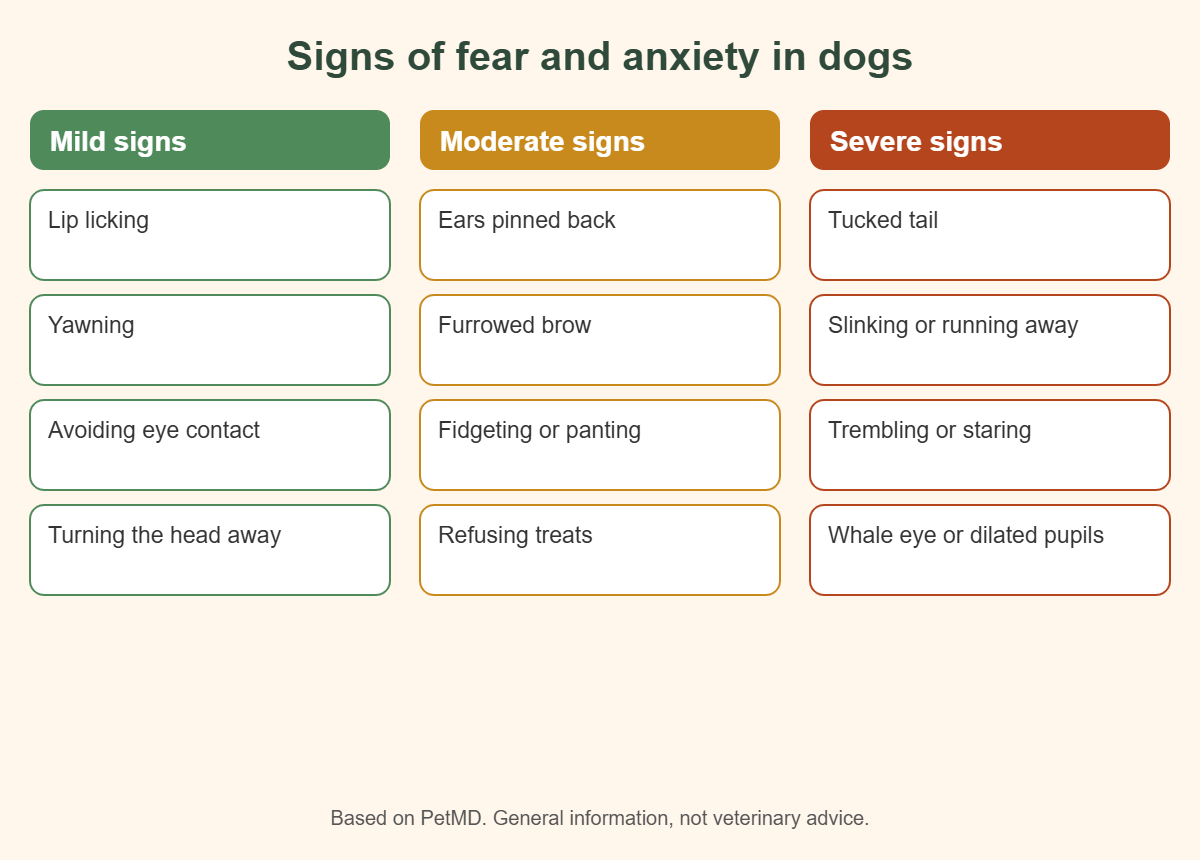
- Mild signs include lip licking and yawning. Severe signs include trembling, a tucked tail and trying to escape (PetMD).
- See your vet first, because pain and illness can cause anxious behavior.
- The main training method is desensitization with counterconditioning: low intensity exposure paired with rewards.
- Go slowly. Stop a session before stress signs appear.
- Punishment makes anxiety worse, so avoid it.
Quick answer
Rule out medical causes with your vet, keep a predictable routine, give daily exercise and a safe space, then expose your dog to its trigger at very low intensity while rewarding calm behavior. Increase difficulty slowly. If progress stalls or the fear is strong, ask a certified trainer or veterinary behaviorist for help.Signs of Anxiety in Dogs
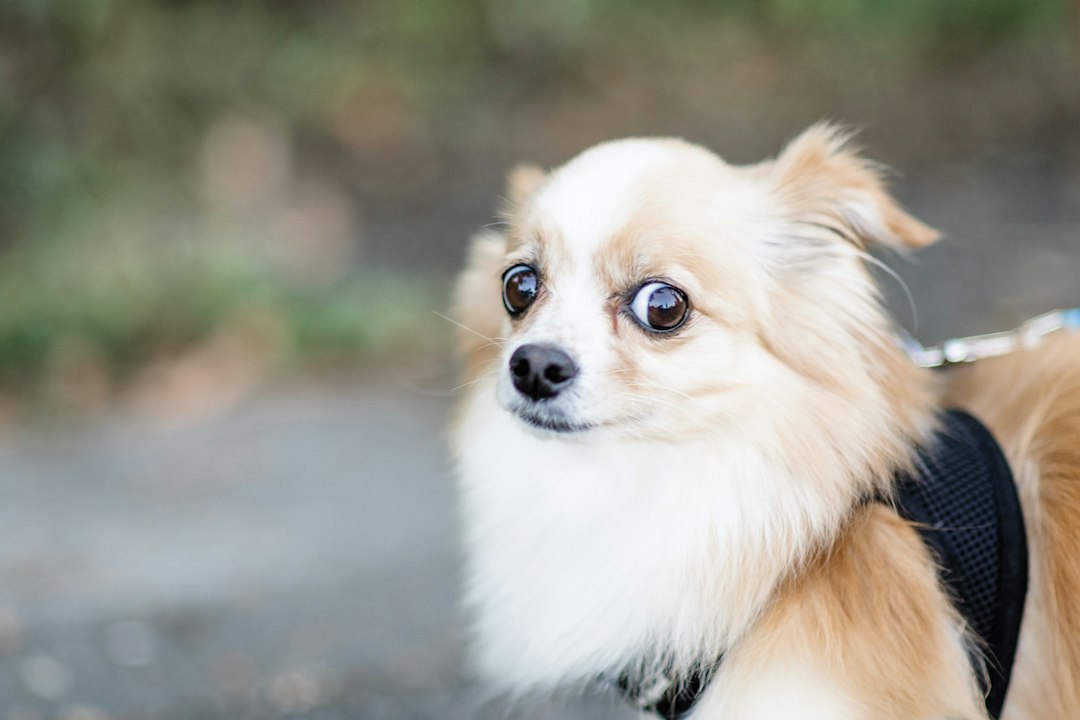
Dogs show anxiety through body language long before they show it through behavior. PetMD sorts the body signs by how strong the fear is, and Chewy and PetMD both list behavior changes to watch for.
Behavior changes
- Excessive barking or whining
- Destructive chewing or digging
- Pacing and restlessness
- Hiding or trying to escape
- Loss of appetite or house soiling
- Heavy panting, drooling or shedding
- Growling, lunging or biting in some dogs
- Losing interest in favorite activities or seeming less trained (PetMD)
Common Causes and Triggers
Triggers differ from dog to dog. The sources list these common ones:
- Separation from family members (PetMD, VCA, Chewy).
- Loud noises such as thunder, fireworks, construction and vacuums (PetMD, Chewy).
- Changes at home or in the daily routine, such as moving or a new schedule (PetMD, Chewy).
- Car rides, vet or grooming visits and boarding kennels (PetMD).
- Unfamiliar people, dogs or surfaces, and busy public places (PetMD).
- Past trauma or poor socialization (Chewy).
- Medical problems such as pain, dental disease, arthritis, digestive issues or cognitive decline (PetMD, VCA).
Our advice: keep a short journal of when anxious behavior happens. PetMD says this helps you spot the trigger, and it gives your vet or trainer useful detail.
Anxiety Dog Training: Methods That Work
Veterinary sources agree on the basics: treat any medical cause, use rewards, avoid punishment and move slowly. The training methods below are the ones they describe.
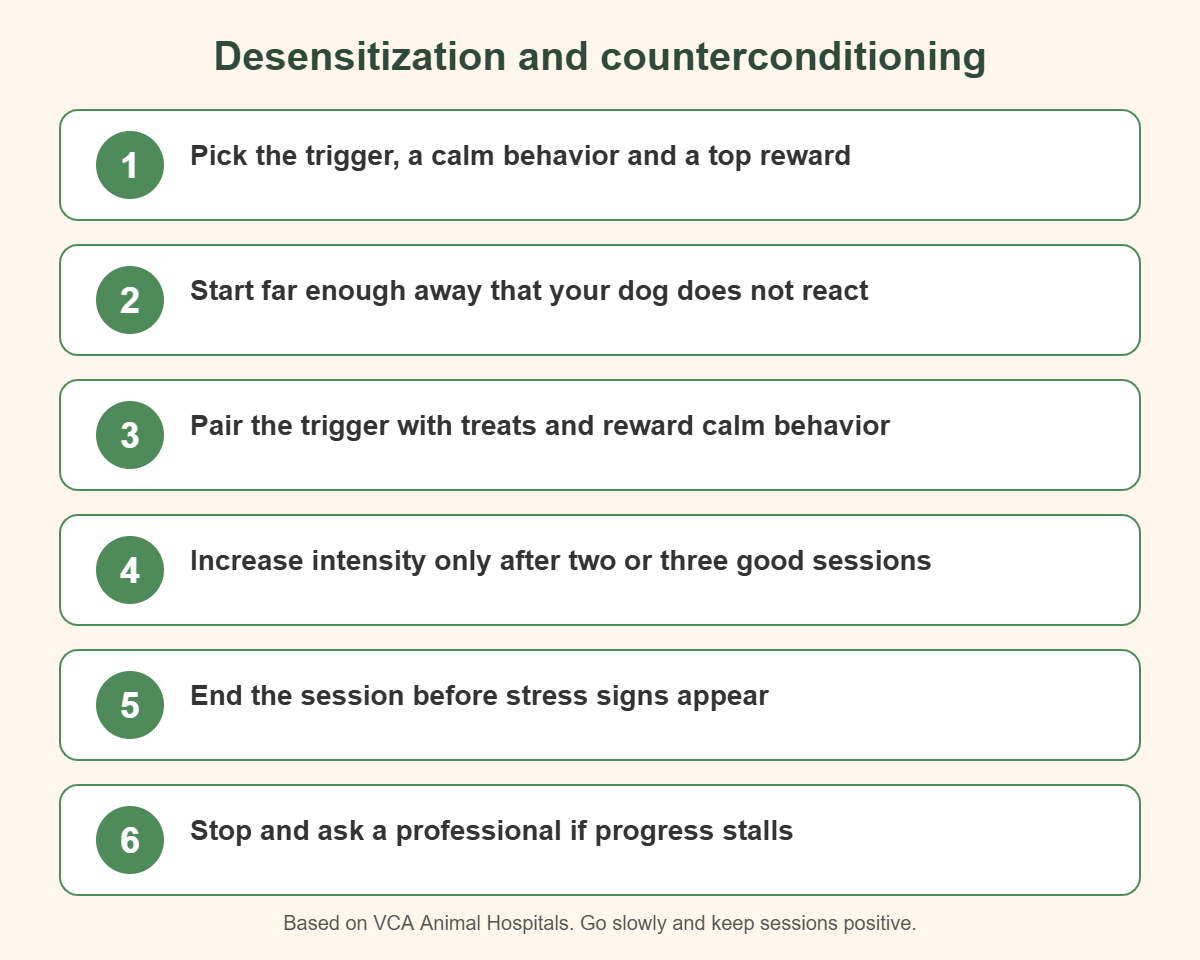
Desensitization and counterconditioning
VCA explains that desensitization gradually exposes a dog to a trigger at low intensity and raises it over sessions. Counterconditioning pairs the trigger with something the dog likes, such as treats or play. For strong reactions the two are usually combined.
- Pick the trigger, a calm behavior such as sitting and a high value reward.
- Lower the intensity by changing distance, volume or speed.
- Start where your dog is not reacting.
- Pair the trigger with treats.
- If your dog is calm and eating, ask for the behavior and reward it.
- Raise intensity only slightly, and only after two to three successful sessions.
- End the session before stress signs appear.
VCA says sessions should happen at least twice a week, ideally daily, and last about 5 to 45 minutes, always ending on a positive note.
Routine, exercise and enrichment
- Predictable routine. Consistent feeding, walks, play and rest help dogs feel secure (VCA, Chewy, PetMD).
- Daily exercise. Walks, fetch and agility work burn off pent up energy (Chewy).
- Mental work. Puzzle toys and food dispensing toys give an outlet (PetMD, VCA).
- Short training sessions every day (PetMD).
A safe space
Set up a quiet, comfortable retreat, such as a bed or mat in a calm spot, where your dog can go when it feels anxious (Chewy, PetMD). VCA suggests adding calming cues, such as background sound or a worn item of your clothing.

Teach a settle cue
VCA recommends teaching a “settle” cue and down stays on a bed or mat, building up the duration gradually before giving rewards. Over time the mat becomes a signal to relax.
Training for Separation Anxiety
Separation anxiety needs its own plan. VCA lists these steps for retraining:
- Keep a predictable daily routine.
- Meet your dog’s needs for play, exercise and toilet breaks before you settle it.
- Reward calm, independent behavior, not following or attention seeking.
- Practice graduated departures, starting with very short absences and increasing time randomly, only while your dog stays relaxed.
- Expose your dog to leaving cues, such as picking up keys, without actually leaving, until they stop predicting departure.
- Give a long lasting food toy when you leave.
- Use a dog sitter, daycare or time off during early retraining to prevent damage and distress.
VCA also suggests recording your dog alone on audio or video to see what it actually does, and checking whether the behavior also happens when you are home, which may point to a medical or house training problem.
What to Avoid When Training an Anxious Dog
- Punishment. VCA lists it among the things to avoid.
- Pushing too fast. VCA says progressing too quickly can cause sensitization, which means a bigger reaction next time.
- Continuing when your dog shows stress, such as panting, trembling, trying to escape or refusing treats (VCA).
- Excited greetings and long goodbyes for dogs with separation anxiety (VCA).
- Relying on crates alone for separation anxiety (VCA).
- Relying on sedatives alone. VCA says they do not reduce the underlying anxiety.
When to See a Vet or Behaviorist
- The anxiety is frequent or severe (PetMD).
- Your dog cannot settle after a stressful event (PetMD).
- It appears suddenly with no obvious cause, or other sudden behavior changes appear (PetMD).
- Your dog is anxious when you are home, which may point to a medical problem (VCA).
- Progress stalls, or your dog seems more sensitive to the trigger (VCA).
A vet can rule out pain and illness and build a plan. VCA says a veterinary behaviorist may adjust the training and may recommend medication, which can improve results when added to a retraining program. We do not give medicine names or doses, so discuss options with your vet.
Where Our Sources Differ
| Topic | What the sources say | Sources |
|---|---|---|
| Crates | PetMD suggests introducing a crate as a comfortable safe place. VCA says crates alone are risky for dogs with separation anxiety. | PetMD, VCA |
| Arrivals and departures | PetMD says stay calm and low key. VCA says ignore your dog at homecoming until it settles, and avoid saying goodbye. | PetMD, VCA |
| Calming products | PetMD and Chewy list pheromone products, comfort vests and supplements as options. VCA’s pages here focus on training and do not cover them. | PetMD, Chewy, VCA |
| Medication | PetMD says medication is used when needed. VCA says it is often most useful alongside retraining and that sedatives alone do not treat the anxiety. Chewy says it may be used in severe cases. | PetMD, VCA, Chewy |
| How long training takes | VCA says hours, weeks or months. PetMD says progress can be gradual and gives no timeline. | VCA, PetMD |
SAFE TO DO
- See your vet first
- Keep a predictable routine
- Give daily exercise and mental work
- Reward calm behavior
- Start training at very low intensity
- Keep a journal of triggers
- Ask a certified trainer if progress stalls
AVOID
- Punishing fear or anxious behavior
- Pushing your dog past its stress signs
- Moving to a harder step too soon
- Big emotional goodbyes and greetings
- Relying on a crate or sedatives alone
- Trying calming products without asking your vet
Frequently Asked Questions
Can an anxious dog be trained?
Yes. Behavior modification with positive reinforcement is a main treatment, ideally with a certified professional trainer (PetMD). Progress is usually gradual, so patience matters.
How long does it take to help an anxious dog?
It depends on how strong the reaction is. VCA says desensitization and counterconditioning can take a few hours, a few weeks or a few months.
Should I comfort my anxious dog?
Stay calm and kind. For separation anxiety, VCA advises rewarding calm, independent behavior and not reinforcing following or attention seeking. Our advice: speak softly, stay relaxed and avoid big emotional reactions.
Can pain or illness cause anxiety?
Yes. PetMD lists pain, dental disease, arthritis, digestive issues and cognitive decline as possible triggers, and VCA says older dogs with pain or hearing and vision loss may become more anxious. A vet visit is the first step.
Do calming products work?
PetMD and Chewy list pheromone products, comfort vests and calming supplements as options. Neither page we read cites proof for a specific product, so ask your vet before trying one.
Is a crate good for an anxious dog?
It depends. PetMD suggests introducing a crate as a comfortable safe place. VCA warns that crates alone are risky for dogs with separation anxiety because escape attempts can cause serious injury.
When should I start socializing a puppy?
PetMD says early socialization, roughly 3 to 12 weeks of age, with treats and praise helps prevent anxiety, while protecting the puppy from disease until fully vaccinated. Ask your vet about timing.
When should I see a vet about my dog’s anxiety?
See a vet if the anxiety is frequent, if your dog cannot settle after a stressful event, or if it starts suddenly with no clear cause. PetMD says sudden behavior changes can signal pain or another medical problem.
Final Thoughts
Anxiety dog training is a slow, kind process, not a quick fix. Start with a vet check, build a calm routine, find your dog’s triggers and practice small, rewarded steps. Stop before your dog gets stressed, and ask a certified trainer or veterinary behaviorist when progress stalls. With patience, many anxious dogs become calmer and more confident.
Sources
- VCA Animal Hospitals: What is behavior modification? Desensitization and counterconditioning (flag: commercial veterinary group, reviewer not confirmed by us)
- VCA Animal Hospitals: Separation anxiety in dogs (flag: commercial veterinary group, reviewer not confirmed by us)
- PetMD: Extreme Fear and Anxiety in Dogs (flag: commercial, reviewer not confirmed by us)
- Chewy: How To Calm an Anxious Dog (flag: commercial pet retailer, no reviewer confirmed)