
How Long Are Cats Pregnant? Cat Gestation Guide
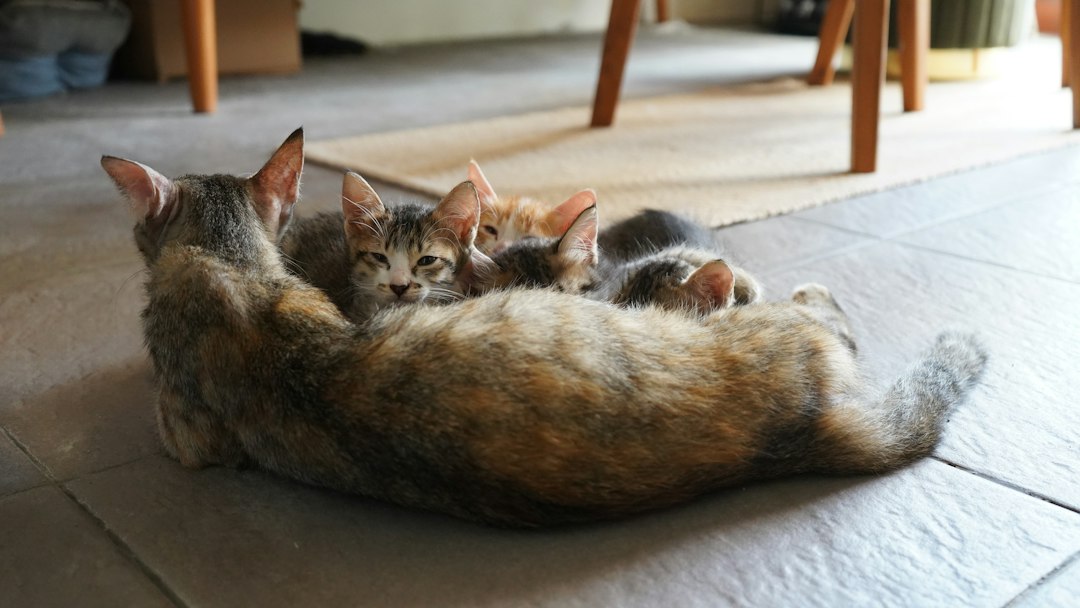
If your cat is expecting, the first question is simple: how long are cats pregnant? Most queens carry their kittens for about 63 to 65 days, which is a little over nine weeks. That is only two months, so the birth can arrive sooner than you think.
This guide gives you a free cat due date calculator, a week by week timeline, the signs of pregnancy, and clear rules for when to call a vet. It also explains why the dates can shift, because cats do not always give you an exact day to count from.
Key takeaways
- Cat how long pregnant? About 63 to 65 days, or 9 weeks
- Normal range: 58 to 70 days, and most queens deliver between day 63 and 67
- First sign: the nipples turn pink and swell around day 15 to 20
- Vet checks: ultrasound heartbeats from about day 21 to 28, and an X ray litter count from about day 45
- Average litter: 3 to 4 kittens
- Labor: most litters arrive within about 6 hours
- Call your vet: if she strains hard for 20 to 30 minutes with no kitten
How long are cats pregnant?
A cat is pregnant for about 63 to 65 days. Vets also describe this as two months or nine weeks. The normal range is a little wider. Many sources give 63 to 67 days for most queens, and 58 to 70 days as the full range.
| Measure | Days | What it means |
|---|---|---|
| Average gestation | 63 to 65 | The number most vets use. It is about 9 weeks, or 2 months. |
| Most queens give birth | 63 to 67 | The most likely window. |
| Full normal range | 58 to 70 | Healthy queens can deliver anywhere in this window. |
| Time to call your vet | After day 70 | No labor signs by day 70, or any problem before that. |
Cat pregnancy is short, so a queen can be due before her belly looks big. Many owners find out late, which is why a calendar helps.
Why the due date can shift:
- Mating date: A cat ovulates after mating, so you count from the day she mated. If she mated several times over a few days, you only get a window.
- Litter size: Larger litters often arrive a little earlier.
- Breed: Breed can change the length by a few days.
- Unknown mating date: Your vet can estimate how far along she is with an ultrasound and an X ray.
Cat pregnancy timeline: week by week
Vets often split the pregnancy into three parts of about 20 days each. The first two parts are hard to tell apart at home. Use this table to know what to expect and what to do.
| Week | Days | What happens | What to do |
|---|---|---|---|
| 1 to 2 | 1 to 14 | Mating, fertilization, and implantation. There are almost no signs. | Keep her routine normal and keep her indoors. |
| 3 | 15 to 21 | The nipples start to pink up and swell, often around day 15 to 20. A vet may feel the kittens at about 2.5 to 3 weeks. | Book a vet visit. |
| 4 | 22 to 28 | Kitten heartbeats can be seen on ultrasound. Her appetite starts to rise. | Move to kitten food or a pregnancy food by the end of the first month. |
| 5 | 29 to 35 | The belly starts to round out. The best time for an ultrasound is day 25 to 35. | Feed small, frequent meals. |
| 6 | 36 to 42 | The belly is clearly bigger. Kitten skeletons begin to show on X ray at about day 42. | Ask your vet if you need a litter count. |
| 7 | 43 to 49 | The kittens grow fast, and you may see them move. | Choose a quiet room for the nest. |
| 8 | 50 to 56 | The nipples swell. She grooms her belly and looks for a nesting spot. | Set up the nesting box about 2 weeks before the due date. |
| 9 | 57 to 65 | Nesting, restlessness, milk, and labor signs. She may stop eating the day before. | Watch her closely and keep your vet’s number ready. |
| After week 9 | 66 to 70 | Still normal for some queens. | Call your vet if there is no labor by day 70. |
Cat pregnancy calculator: find the due date
Enter the day your cat mated. The tool shows her due date, the likely window, how far along she is, and your vet and care dates. You can also save the dates to your phone calendar.
Cat Pregnancy Due Date Calculator
Not sure? Keep 64 days. If she mated on several days, use the first day.
No calculator at hand? Add 64 days to the mating date. Here are some examples:
| Mating date | Due date (64 days) | Likely window (63 to 67 days) |
|---|---|---|
| January 1 | March 6 | March 5 to March 9 |
| April 1 | June 4 | June 3 to June 7 |
| July 1 | September 3 | September 2 to September 6 |
| October 1 | December 4 | December 3 to December 7 |
These dates assume a year where February has 28 days.
Signs a cat is pregnant
Cats hide pregnancy well in the first weeks. Most queens show clear signs only after 3 to 5 weeks. Watch for these changes:
- Pinking up: The nipples turn pink and get bigger around day 15 to 20. This is often the first sign.
- Heat stops: If she was cycling and the heat signs stop for more than 4 weeks, she may be pregnant.
- Calmer and cuddlier: Many queens become softer and more friendly in the first half.
- Better appetite and weight gain: She eats more and gains weight as the kittens grow.
- Bigger belly: The belly swells most in the last 3 weeks.
- Nesting and belly grooming: In the last weeks she licks her belly and looks for a quiet hiding place.
A false pregnancy (pseudopregnancy) can look the same. The nipples may grow and even make milk, but there are no kittens. A vet visit tells the two apart.
How to confirm pregnancy and count kittens
| Method | When | What it shows | Notes |
|---|---|---|---|
| Touch exam (palpation) | About 2.5 to 3 weeks | Small swellings in the womb | Needs an experienced vet. |
| Hormone blood test | 28 days or more after mating | Pregnant or not | Simple, but does not count kittens. |
| Ultrasound | From about day 21 to 22, best day 25 to 35 | Pregnancy and kitten heartbeats | Before day 21 it can miss a pregnancy. It cannot give a reliable kitten count. |
| X ray | From about day 42 to 45 and later | Kitten skeletons and the litter size | Best done late. Overlapping skulls can make the count a little off. |
If you want a kitten count, an X ray late in pregnancy is the best choice. Knowing the number helps your vet spot a stuck kitten during labor.
Feeding and care for a pregnant cat
- Food: Switch to kitten food or a food made for pregnancy and nursing by the end of the first month. Keep it up until the kittens are weaned.
- Meals: Give small, frequent meals. As the kittens grow, they crowd her stomach, so she may eat less at one time.
- Water: Keep fresh water in front of her all day.
- Vaccines: They work best before pregnancy. Live vaccines should never be given to a pregnant cat. Ask your vet before any shot.
- Worms and fleas: Use products that are safe for pregnant cats. Bring a stool sample to your vet, because worms can pass from mother to kittens.
- A safe home: Give her a quiet, warm, draft free spot. Keep her indoors and away from strings and loose threads.
Warning: Any vaginal discharge, especially blood, is not normal during pregnancy. Also call your vet if she stops eating, vomits, or has diarrhea. Cats hide illness well, so act early.


Make a nesting box
Cats like to give birth in a private, quiet place. If you do not give her one, she may choose a cupboard or a pile of laundry. Set up the nest about 2 weeks before the due date.
- Use a cardboard box or a covered bed lined with clean towels or old sheets.
- Put it in a quiet room, away from drafts and noise, where you can still check on her from a distance.
- Keep the room warm, at about 22 to 23 degrees Celsius.
- Prepare two or three spots, because some queens reject the first one.
- Keep the nest at about 85 to 90 degrees Fahrenheit for the first week after birth.
Signs of labor and the stages of kittening
Most queens stop eating the day before labor begins. She may scratch her nest, pace, call out, or become clingy. If you check her temperature, a drop below 100 degrees Fahrenheit means labor will likely start within a day. Milk may also leak from the nipples.
| Stage | What happens | Normal time | Call your vet if |
|---|---|---|---|
| Stage 1 | She is restless and nesting. Contractions start, but they are hard to see. | Up to 24 hours or more. It is shorter in queens that have had kittens before. | It lasts longer than 24 hours with no straining. |
| Stage 2 | Strong, visible straining. Each kitten is born in a thin sac, usually head first. | The first kitten arrives within about 30 to 60 minutes of hard straining. Then a kitten comes every 10 to 60 minutes. | She strains hard for 20 to 30 minutes with no kitten, or more than 2 hours pass between kittens. |
| Stage 3 | A placenta (afterbirth) passes with each kitten. A greenish black color is normal. | Usually within minutes of each kitten. | A placenta is missing, or they are not all out within 4 to 6 hours. |
Most litters are born within about 6 hours, though some labors take longer. Rests of 10 minutes to an hour between kittens are normal. A queen who feels unsafe can even pause labor for 24 to 36 hours, so keep the room calm and quiet and do not crowd her.
Call your vet at once if:
- She strains hard for 20 to 30 minutes and no kitten appears
- A kitten is stuck in the birth canal for more than 10 minutes
- You see heavy green or bloody discharge and no kitten follows
- More than 2 hours pass between kittens and she seems to have more inside
- She is weak, has a fever, or the discharge smells foul
- A placenta is still missing after all kittens are born
Write the mating date on a calendar the day it happens. Because cat pregnancy is so short, a correct date is the best tool you have.
Paws and Facts Tip
After the birth: what is normal
- The queen cares for the kittens. She bites the cord, licks each kitten, and often eats the placenta. This is normal.
- First milk: Kittens should nurse soon after birth to get colostrum, the first milk full of antibodies.
- Discharge: A red brown discharge can last up to 3 weeks. Green or foul smelling discharge is not normal.
- Warmth: Kittens cannot keep themselves warm. Use a hot water bottle they can move away from. Never use an electric heating blanket.
- Growth: Kittens are born blind and deaf. Their eyes open at about 7 to 14 days, and they are weaned at about 8 weeks.
- Next pregnancy: A cat can get pregnant again while she is still nursing. Keep her away from male cats and ask your vet about spaying.
Call your vet if she refuses to nurse, rejects the kittens, or looks unwell, or if any kitten cries a lot or will not feed.
How many kittens do cats have?
The average litter is about 3 to 4 kittens, and a litter of more than 6 is considered large. First time mothers and some breeds may have fewer or more. An X ray late in pregnancy gives the best count. With a large litter, the mother needs even more calories, and she may not have enough milk for every kitten. Your vet can suggest a cat milk replacer if needed.
Common mistakes to avoid
- Waiting too long to see a vet. Early checks find problems and confirm the due window.
- Counting from the wrong date. Count from the day she mated, not the day you noticed her belly.
- Giving live vaccines or unsafe flea products. Always ask your vet first.
- No nest ready. She may give birth in a spot that is hard to reach or unsafe.
- Handling her too much in labor. Stay close and calm, but do not interfere unless there is a problem.
- Ignoring warning signs. Hard straining with no kitten, bloody discharge, or weakness needs a vet right away.
More guides to read next:
Frequently asked questions
How long is a cat pregnant in weeks and months?
A cat is pregnant for about 9 weeks, which is a little over 2 months. The average is 63 to 65 days, and the full normal range is 58 to 70 days.
How long do cats stay pregnant before giving birth?
Most cats give birth 63 to 67 days after mating. A few deliver earlier or later. Call your vet if she shows no labor signs by day 70.
When does a pregnant cat start to show?
Most cats show little until 3 to 5 weeks. The nipples pink up around day 15 to 20, and the belly swells most in the last 3 weeks.
How soon can a vet confirm a cat is pregnant?
A vet can often feel kittens at about 2.5 to 3 weeks. An ultrasound from about day 21 to 22 can show the pregnancy, and it works best between day 25 and 35. A hormone blood test works 28 days or more after mating.
Can a cat be pregnant for 70 days?
A few healthy queens go to about 70 days, but that is the limit. Call your vet if she has no labor signs by day 70, or sooner if she seems unwell.
At what age can a cat get pregnant?
Cats can get pregnant from about 4 months old, and 5 to 6 months is most common. Short haired breeds often mature earlier than long haired breeds.
How long does cat labor last?
Most litters arrive within about 6 hours. The first kitten comes within 30 to 60 minutes of hard straining, and then a kitten follows every 10 to 60 minutes. Some labors take longer.
How many kittens can a cat have?
The average litter is 3 to 4 kittens. A litter of more than 6 is considered large.
Can a cat get pregnant while nursing?
Yes. Nursing does not stop a cat from coming back into heat, so she can get pregnant again. Keep her away from male cats and ask your vet about spaying.
When should I call a vet during labor?
Call right away if she strains hard for 20 to 30 minutes with no kitten, if more than 2 hours pass between kittens, if you see heavy green or bloody discharge with no kitten, or if she seems weak.
What should I feed a pregnant cat?
Feed kitten food or a pregnancy and nursing food from the end of the first month. Give small, frequent meals and keep fresh water out at all times.
This guide is for education only. It does not replace advice from your veterinarian, who knows your cat.
Helpful resources
- PetMD: Cat Pregnancy, Signs, Stages, and Care
- Cats Protection: Birth and Kittening
- PDSA: Cat Labour, A Guide to Your Cat Giving Birth
- WebMD: Cat Pregnancy and Gestation
Final thoughts
So, how long are cats pregnant? About 63 to 65 days, with a normal range of 58 to 70 days. Write down the mating date, use the calculator above, book your vet checks early, and set up a quiet nest before week 8. Call your vet if she strains for 20 to 30 minutes with no kitten, or if she has no labor signs by day 70. With a clear plan, your cat and her kittens will have the best start.